

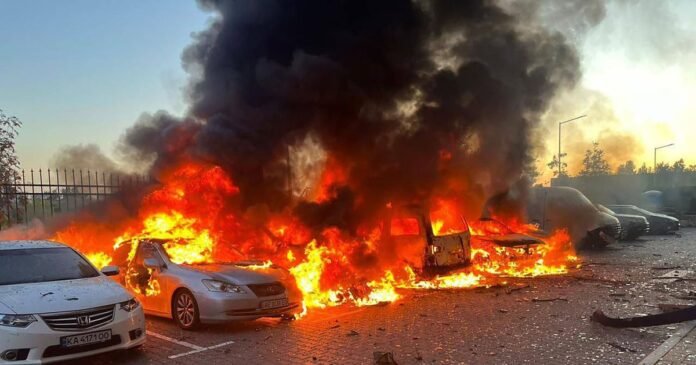

Vladimir Putin initiated a series of intense attacks on Ukraine early today, marking a significant escalation in the conflict. This action directly challenged Donald Trump and led to a widespread deployment of NATO fighter jets in Poland as a precautionary measure.
The Russian military campaign, characterized by rapid and overwhelming force, included the intrusion of Putin’s MiG-31s into Estonian airspace and provocative maneuvers near a Polish drilling platform in the Baltic Sea. Despite claims of seeking diplomatic solutions, Putin utilized strategic nuclear-capable bombers and hundreds of military drones to target various locations in Ukraine.
In response to the escalating situation, NATO forces in Poland activated all available resources to counter the Russian strikes, highlighting the potential threat to border regions. The aggression persisted despite international criticism, with reports indicating significant damage and casualties in Ukrainian cities like Dnipropetrovsk.
The attacks extended to key defense-linked facilities and residential areas, causing power outages and destruction. Ukraine retaliated with targeted drone strikes on Russian energy installations, resulting in significant disruptions to oil production and exports. Volodymyr Zelensky condemned the attacks as deliberate acts of intimidation aimed at civilians and infrastructure, emphasizing the need for a unified international response to deter further aggression.
The ongoing conflict has not only escalated military tensions but also impacted critical sectors, leading to economic repercussions such as fuel shortages and price increases. Despite the destructive consequences, Ukraine remains resolute in its defense efforts and calls for strengthened cooperation to counter the Russian military threat effectively.