

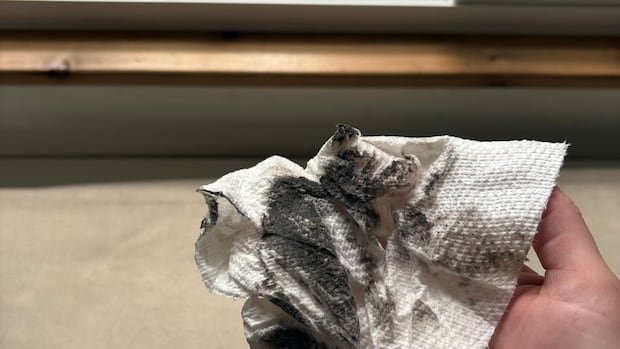

A group of researchers in Hamilton has uncovered insights into the issue of soot accumulation in neighborhoods close to the city’s industrial zone. Residents have long voiced concerns about a dirty, dark substance covering their properties, with a recent surge in complaints during early July highlighting the severity of the problem.
Sarah Styler, an environmental chemistry associate professor at McMaster University, and Grace Yao, a PhD candidate in Styler’s research group, are part of a project titled “What’s the Grime?” aimed at addressing this pressing question. By collaborating with volunteers to gather samples across the city in 2024 and 2025, the researchers discovered that the soot comprises harmful chemicals typically associated with coal burning. Additionally, elevated levels of dust and polycyclic aromatic hydrocarbons (PAHs) were found in proximity to the industrial vicinity in northeast Hamilton.
Styler, in partnership with Environment Hamilton, conducted the study using a $15,000 grant awarded by the university in 2024. Both residing in affected areas – Styler in east Hamilton and Yao in Corktown – they have personal encounters with the soot issue. Styler emphasized the longstanding nature of the problem, noting historical references to the soot dating back to the 1950s.
The team employed sampling kits to collect soot from the homes of 50 volunteers across the city, analyzing the samples at four-month intervals. According to Styler, the research revealed a higher deposition of dust closer to the industrial sector, alongside an increased presence of toxic compounds in that region.
While the study focused on 13 different PAHs, Styler highlighted that there could be additional hazardous substances present in the grime, describing it as a viscous mess. Due to resource constraints, Yao mentioned that the study could not investigate all components of the grime, leaving room for other contributors to the fallout. Nonetheless, coal combustion was identified as a significant factor in the formation of the PAHs detected.
Styler acknowledged that the findings may not come as a surprise to residents directly impacted by the fallout, attributing the substance to industrial emissions near coke plants. Despite this, community members have expressed frustration over a perceived lack of information from official channels. The Ministry of the Environment, Conservation and Parks has initiated testing at industrial facilities in Hamilton to identify potential sources of the soot.
The researchers are set to present their findings at a community meeting on August 20, with plans to expand the study to include 200 volunteers and explore additional compounds in the grime. Their manuscript is undergoing peer review, and they intend to share further insights once this process concludes.