

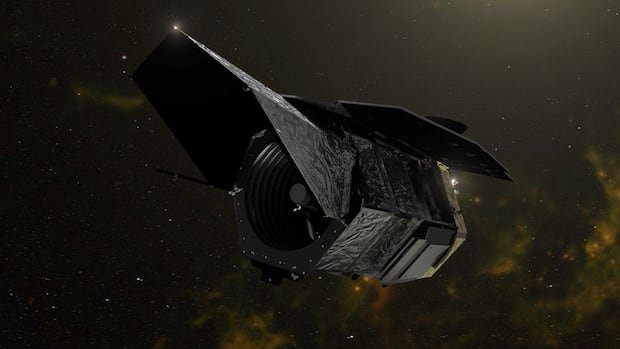

At 7:26 a.m. on Sunday morning, a cutting-edge space telescope is set to launch from Cape Canaveral, Florida atop a Falcon Heavy rocket, aiming to unveil new mysteries of the cosmos. The highly awaited Nancy Grace Roman Space Telescope, honoring NASA’s inaugural chief astronomer and the architect of the Hubble Space Telescope, will be positioned 1.5 million kilometers away at a gravitational equilibrium point known as L2 for a five-year mission, extendable beyond.
What sets the Nancy Grace Roman Space Telescope apart from its predecessors like the Hubble Space Telescope and the James Webb Space Telescope is its unique suite of instruments. With a 2.4-meter mirror akin to the Hubble, the telescope also features a coronagraph for blocking starlight to detect planets orbiting distant stars. Additionally, its Wide Field Instrument, as sensitive as the Hubble’s, can capture images of an area 100 times larger, facilitating comprehensive sky and stellar surveys.
The telescope’s state-of-the-art camera will be capable of resolving billions of stars, enabling diverse astronomical studies. Anticipation is high for the groundbreaking discoveries expected from the Nancy Grace Roman Space Telescope.
### Exploring New Worlds
While the existence of life on other planets remains unknown, astronomers are actively exploring other stellar systems to comprehend the uniqueness of our solar system. To date, over 6,300 exoplanets have been confirmed, predominantly by the Kepler Space Telescope.
One of the primary methods for discovering exoplanets is the transit approach, where telescopes monitor stars for planetary transits, indicated by slight fluctuations in starlight. The Nancy Grace Roman Space Telescope will significantly expand on this method by observing a vast array of stars, potentially uncovering a multitude of transiting exoplanets.
In addition to the transit method, the telescope will employ microlensing to delve deeper into the search for exoplanets, offering a unique perspective to identify Earth-like planets with longer orbital periods.
### Shedding Light on the Dark Universe
A mere five percent of the universe is visible, with the rest comprising dark matter (27%) and dark energy (68%). Dark matter, an imperceptible force binding galaxies and stars, remains a longstanding astronomical enigma. The Nancy Grace Roman Space Telescope will focus on locating dark matter within galaxies and dense globular clusters, shedding light on their elusive nature.
The mission aims to map the distribution of dark matter and ordinary matter in millions of galaxies, providing crucial insights into cosmic structures. By studying dark energy, which propels the universe’s expansion, the telescope will contribute to our understanding of fundamental cosmological processes.
The Nancy Grace Roman Space Telescope promises a new era of astronomical exploration, poised to unveil the hidden facets of the universe and revolutionize our cosmic understanding.