



Christina Applegate has disclosed that after five years of relentless advocacy for fellow individuals diagnosed with multiple sclerosis (MS), her doctors now suspect she may have been misdiagnosed.
“It’s like I’m back to square one,” she expressed regarding this revelation.
Applegate recounted her experience during a two-part episode of the MeSsy podcast, which she co-hosts with Jamie-Lynn Sigler, another MS patient. She had taken some time off from the show to come to terms with the news.
With noticeable emotion, Applegate shared that although her physician congratulated her upon revealing she did not have MS, she felt anything but joy—merely a sense of confusion.
“You can’t just get misdiagnosed and suddenly feel better. I haven’t improved… if anything, I feel worse in certain ways,” she remarked.
“My legs aren’t functioning; all the same issues are still present.”
Multiple sclerosis is a complicated autoimmune disorder affecting the central nervous system. In MS, the immune system erroneously attacks myelin, which is the protective sheath around nerves in the central nervous system. This disruption hampers communication between the brain and body, leading to symptoms like numbness, memory problems, fatigue, mobility challenges, and even vision impairment.

Applegate arrives for the 29th Screen Actors Guild Awards in Century City, Calif., in February 2023. (Valerie Macon/AFP/Getty Images)
Dr. Mark Freedman, who leads the multiple sclerosis research unit at The Ottawa Hospital, likened it to a wire where the outer rubber has deteriorated, exposing the copper core.
“Now you have a bare wire, which doesn’t transmit well,” he explained to CBC News. This condition leaves the nerve more susceptible to inflammation, which can further damage it, potentially leading to irreversible loss of function.
The disease manifests in various ways; some individuals experience cycles of remission and relapse, while others face a steady decline that results in increasing disability.
Misdiagnosis is a common issue worldwide. A 2019 study from Cedars-Sinai in the U.S. indicated that nearly one in five patients are misdiagnosed. A 2024 review found misdiagnosis rates ranging from five to 41 percent, estimating a pooled rate of 15 percent across six studies.
‘Tested for everything’
Applegate previously announced her MS diagnosis on social media in August 2021, but noted that her symptoms began earlier that year, starting with numbness in her feet that gradually ascended her legs.
“And then the pain began,” she recalled. “All the while, I was being tested for everything imaginable.”
-
Man who lost legs to MS warming heads and hearts by knitting tuques on custom-made cot
-
Mom’s multiple sclerosis journey an inspiration for Vancouver Goldeneyes goalie
-
The subject of Lyme disease is littered with misinformation. Celebrities are part of the problem, experts say
She mentioned undergoing spinal and brain MRIs, along with a spinal tap, with doctors initially suspecting a mild form of the illness. However, as her symptoms worsened and nearly 40 lesions were found on her brain, she received her MS diagnosis.
“I felt relieved, thinking, ‘Finally, I have an answer,’” she shared in the podcast episode.

Applegate attends the 26th Annual Screen Actors Guild Awards in Los Angeles in January 2020. (Mike Coppola/Getty Images for Turner)
However, a couple of years later, her doctor halted her infusion treatments to examine how her B cell levels would react. When those levels remained unchanged, doctors began to reevaluate her diagnosis, utilizing “new technology that had emerged” in brain MRIs.
In 2024, the criteria for diagnosis were revised following a committee of experts’ evaluation of recent scientific advancements, including improved MRI technology for more precise detection.
Eventually, it was determined that Applegate did not have MS, but no alternative diagnosis was provided, leaving her uncertain about the cause of her persistent symptoms.
“I feel like I’ve disappointed everyone, you know?” Applegate said tearfully to co-host Sigler, expressing her sentiment that they had become “the poster children for MS” together. The duo launched their podcast in 2024, discussing parenting and everyday life challenges while managing the illness.
“It was like I had a justification… for why my days were difficult, and now I don’t have that reason. It’s incredibly unsettling.”
The actress, who stepped away from acting in 2021 following her diagnosis, is recognized for her roles in films such as Anchorman: The Legend of Ron Burgundy and Bad Moms, as well as her Emmy-nominated performance in Netflix’s Dead to Me.
Global rates of MS
According to the MS International Federation, over 3.1 million individuals are living with MS around the globe. Canada has one of the highest prevalence rates, with more than 90,000 Canadians—approximately one in every 400—affected. Women account for roughly 70 percent of cases.
The challenge in diagnosing MS lies in the overlap of its symptoms with those of various other conditions. For example, migraines can also lead to white spots appearing on brain MRIs, and nerve damage from other illnesses can result in numbness.
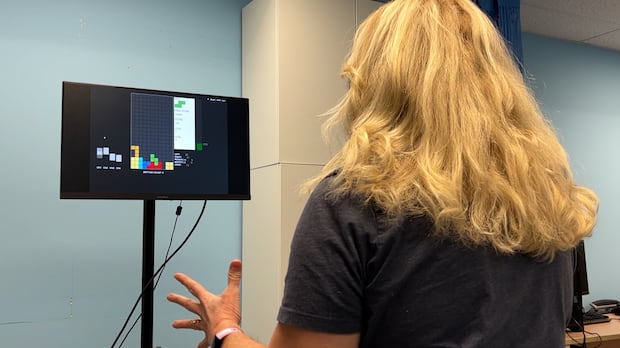
A study that aims to improve balance in people with multiple sclerosis is ongoing at McMaster University in Hamilton. The study has people hooked up to a computer and plays classic videogame Tetris with their body.
Freedman warned that receiving treatment for MS when one does not actually have it can pose risks, as some aggressive MS therapies suppress the immune system, potentially making patients vulnerable to infections unnecessarily.
“The longer you are on these treatments, especially as you age, the higher the likelihood of encountering complications,” he noted.
In Canada, he estimates the misdiagnosis rate is significantly lower than in the U.S., at under five percent, attributing this to the country’s greater number of MS specialists and dedicated MS centers.
“We instruct our residents and fellows that if there is uncertainty regarding the diagnosis, they should follow up with patients, repeat tests, and investigate other potential conditions that could mimic MS without assigning that label prematurely,” he stated.
-
Researchers want to know how people with multiple sclerosis might be helped by playing Tetris
-
UBC researcher suggests multiple sclerosis may develop earlier than people think
During the podcast, Sigler reassured Applegate that her advocacy remained significant, even if she was misdiagnosed, expressing hope that one day Applegate might be able to dance again.
“I’m going to keep believing that this could be a blessing for you,” Sigler stated.