


Canada’s economic expansion came to a halt in August for the second consecutive month, and a potential decline is forecasted for September, according to data released by Statistics Canada on Friday.
The real gross domestic product remained virtually unchanged for August, following a period of stagnant growth in July.
Economists surveyed by Reuters had anticipated an increase of 0.2 percent for August.
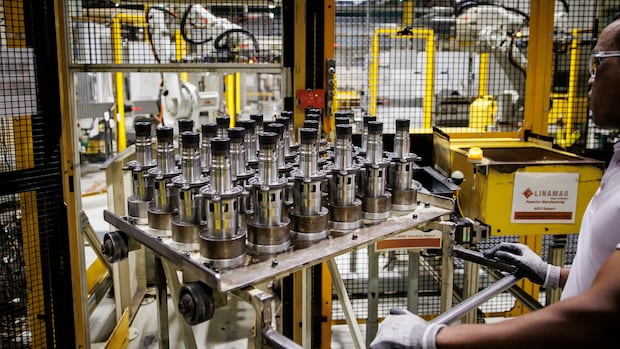
Challenges were evident in wholesale trade and the public sector. Wholesale trade experienced a 1.4 percent decrease in August, with nearly all subsectors showing contraction. For the first time in seven months, wholesalers dealing in motor vehicles and parts faced a downturn, as Statistics Canada noted a decline in car manufacturing and reduced imports of passenger vehicles.
The public sector, which includes areas such as education services, healthcare, and social assistance, also saw a downturn. The conclusion of work related to the 2026 census primarily contributed to the drop in government public administration activity.
Despite resilience in the face of challenging U.S. tariffs, Canada’s economy is facing additional headwinds from newly imposed import bans on various Canadian products. Deloitte has revised its growth projections for the upcoming year downward by 20 percent.
The mining, quarrying, and oil and gas sector remained unchanged, as a rise in mining and quarrying activities balanced out a reduction in oil and gas output due to maintenance at several facilities.
Retail trade was one of the positive highlights, achieving a 1.2 percent growth that more than compensated for the downturn in July.
Manufacturing experienced its fifth increase in seven months; gains were also noted in the transportation and warehousing sectors, along with the finance and insurance industry in August.
Early estimates from Statistics Canada for September indicate a 0.1 percent decline in real GDP, partly attributed to losses in manufacturing and the mining, quarrying, and oil and gas extraction sectors.
This sluggishness in September, combined with stagnant growth in July and August, suggests a trend of economic weakness in recent months, as noted by BMO chief economist Doug Porter.
“The momentum that seemed to be developing during the spring has dissipated, and the Bank of Canada highlighted this as evidence of economic resilience,” Porter remarked in a statement, referencing the economic conditions noted when the central bank increased interest rates earlier this week.
Porter suggested that some of the observed weakness could be “overstated” due to the one-time drop related to the census. However, ongoing trade tensions and declining job numbers in recent months provide clear indications that the economy is struggling to expand.
Even with flat growth in July and August and signs of a downturn in September, the agency’s preliminary estimates still project a 1.3 percent annualized increase in real GDP for the third quarter, a deceleration from the 3.3 percent growth observed in the second quarter.
This figure falls short of the two percent growth that the Bank of Canada had forecasted for the third quarter in its monetary policy report issued on Wednesday.
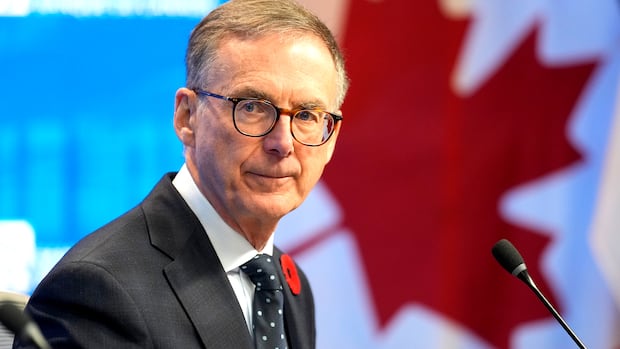
After maintaining interest rates for nearly a year, the Bank of Canada has increased the policy rate to 2.5 percent. Bank governor Tiff Macklem stated that this hike was essential to combat inflation fueled by rising energy costs.
CIBC economist Andrew Grantham noted that while the bank had already anticipated some deceleration in the fourth quarter of 2026, the recent data suggests that the economic momentum entering that final period may be weaker than initially expected.
“Certainly, there will be more data released before the December meeting,” Grantham mentioned in a communication to investors. “However, the current release supports the notion that the bank may refrain from further interest rate increases for now.”
This week, the central bank raised its key lending rate by a quarter point to 2.5 percent. While some economists believe this could initiate a series of consecutive rate hikes, others suggest the bank might maintain rates at 2.5 percent while assessing the need for additional adjustments.