

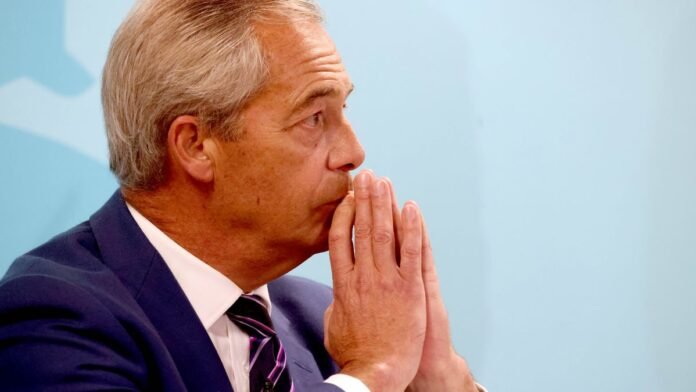

Nigel Farage’s recent push to restrict migrants’ ability to seek permanent residency has quickly unraveled due to a mistake concerning savings calculations. The Reform UK leader proposed eliminating indefinite leave to remain (ILR) and replacing it with a system where migrants must renew their visas every five years if his party gains power.
Under the proposed system, applicants would need to fulfill specific requirements such as a higher income threshold and proficiency in English. They would also be required to have resided in the UK for seven years, instead of the current five, with stricter regulations on family reunification. Moreover, the new visa would exclude access to social benefits, according to the party.
Both Farage and Reform’s policy head, Zia Yusuf, touted potential savings exceeding £230 billion to taxpayers. However, these figures seem to originate from a disputed report by the Centre for Policy Studies published in February, which the think tank has advised against using.
A source from the Labour party criticized Reform UK’s proposal, stating that it had already started to crumble. They accused Reform of lacking a credible plan and resorting to vague responses. Similarly, Keir Starmer’s spokesperson accused Reform UK of promoting division rather than addressing the nation’s challenges.
Rachel Reeves, the Chancellor, further dismantled Reform UK’s financial claims, indicating that their projected savings were already unraveling. She emphasized the government’s efforts to address illegal migration and reform the welfare system to reduce the benefits bill.
In response, a Reform UK representative defended their analysis, suggesting that the actual fiscal impact could surpass existing estimates due to different migration patterns and family demographics. The spokesperson highlighted the potential higher utilization of ILR by certain migrant cohorts, leading to increased costs beyond the projected £234 billion.
The ongoing dispute over the financial implications of Reform UK’s proposal highlights the complexity and differing perspectives on immigration and welfare policy in the UK.