

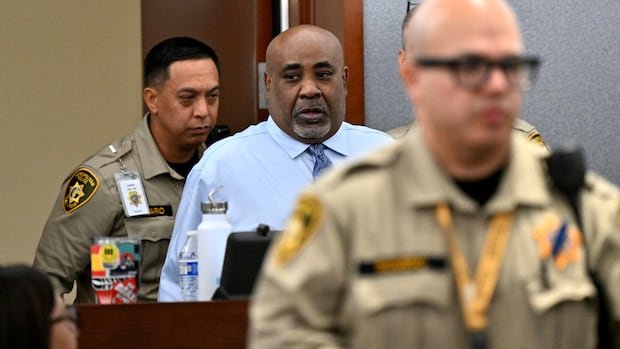

A trial for the murder of iconic rapper Tupac Shakur commenced with the selection of jurors for a former gang member accused of involvement in the unsolved shooting nearly three decades ago. Duane (Keffe D) Davis, aged 63, faces a murder charge related to Shakur’s death in 1996. Davis, who has been in custody since 2023, pleaded not guilty to the accusation. The trial is underway in Las Vegas, the location where the fatal shooting occurred on September 7, 1996.
The prosecution’s strategy does not involve proving that Davis was the one who pulled the trigger. Instead, they aim to establish to the jury that he held a leadership role within the group responsible for targeting Shakur during the incident on the Las Vegas Strip. During the initial stages of the trial, Davis, adorned in a blue dress shirt and tie, sat calmly beside his attorney as Nevada Judge Carli Kierny questioned a panel of 75 potential jurors about various aspects, such as medical conditions, language barriers, and conflicts with serving.
William Leslane, Shakur’s cousin, expressed skepticism regarding the trial’s ability to deliver justice, stating that accountability, though potentially achieved, comes too late to bring true justice for the slain rapper. Leslane emphasized the need for a thorough investigation at the time of Shakur’s murder, criticizing the delayed pursuit of justice.
Significant evidence in the case is expected to be derived from a book co-authored by Davis. In his 2019 memoir, “Compton Street Legend,” Davis detailed his alleged involvement in the shooting. Tupac, a prominent figure in the rap industry with hits like “Dear Mama” and “California Love,” was associated with West Coast hip-hop despite being born in New York City. His untimely demise at the age of 25 left a lasting impact on the music world, leading to the release of multiple posthumous albums following his four solo releases during his lifetime.
The night of the shooting, Shakur and Death Row Records co-founder Marion (Suge) Knight were attending a boxing match in Las Vegas. Subsequently, an assailant in a Cadillac opened fire on their vehicle, resulting in Shakur sustaining fatal injuries. Despite the passage of time, the murder of Tupac Shakur remains shrouded in speculation and conspiracy theories, with ongoing tensions between East and West Coast rappers further complicating the narrative surrounding the tragic incident.
Davis provided a detailed account of the events leading up to the shooting in his book, attributing the violence to a sense of retribution following an altercation earlier that evening involving his nephew. The narrative outlined in Davis’s memoir is expected to play a pivotal role in the trial, alongside interviews and statements made by the accused both in public and to investigators.
As the trial progresses, the legacy of Tupac Shakur continues to resonate within the music industry and beyond. Despite the regret expressed by Davis for his alleged role in the shooting, the impact of Shakur’s artistry, political activism, and multifaceted talent endures, solidifying his status as a dynamic and influential figure in the realm of hip-hop.