

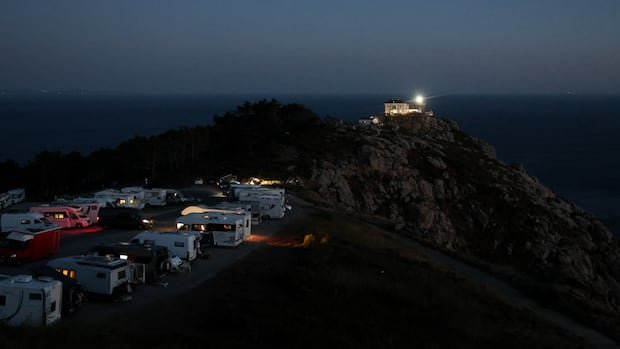

Hundreds of tourists have flocked to Spain to witness the solar eclipse on Wednesday. However, the event coincides with high temperatures and an increased wildfire risk in the country, prompting concerns for authorities aiming to prevent fire damage. Virginia Barcones, the secretary general for civil protection and emergencies at Spain’s Interior Ministry, emphasized the need to curtail activities that could potentially ignite fires due to the challenging summer marked by significant forest fires.
A heat wave has gripped Europe since May, exacerbating Spain’s wildfire season. Over 603,000 acres of land have already been scorched in about 400 fires this year, as reported by the European Forest Fire Information System. To safeguard against additional fires during the eclipse, authorities are deploying 35,000 officers to monitor large outdoor gatherings and swiftly address any potential fire incidents, Barcones mentioned.
Spain is a prime location for viewing the solar eclipse, with the path of totality spanning across northern Russia, eastern Greenland, western Iceland, northeastern Portugal, and a considerable portion of northern Spain. Only those within the path of totality will witness the sun fully obscured by the moon. As excitement builds for this rare event, authorities are reminding viewers, including those in Canada witnessing a partial eclipse, to use proper eye protection.
In anticipation of the influx of eclipse enthusiasts, Spain has designated 660 official viewing sites to accommodate the expected 440,000 visitors. The economic impact study by the Ministry of Economy, Trade, and Business estimates that the eclipse will contribute over 347 million euros to Spain’s economy. Despite the wildfire concerns, tourists remain enthusiastic about experiencing the eclipse, drawn to the awe-inspiring spectacle of nature.
Dry conditions and fire risks persist in Spain, with three major wildfires ongoing in Huelva, Segovia, and Huesca. The forest fire index is forecasted to reach very high or extreme levels on eclipse day, as Spain faces exceptionally dry conditions following a record low rainfall in July. With the majority of wildfires being human-caused, the influx of people in rural areas heightens the potential for ignition sources, as cautioned by experts.
While authorities are prepared to handle the eclipse-related challenges, including the risk of wildfires, enthusiasts are undeterred in their pursuit of this celestial event. The eclipse fervor continues to captivate travelers, who see it as an opportunity to witness a natural wonder and embrace shared experiences that transcend geographic boundaries. This solar eclipse is just the beginning of a series, with two more anticipated in the coming years, promising more celestial spectacles for astrotourism enthusiasts.