

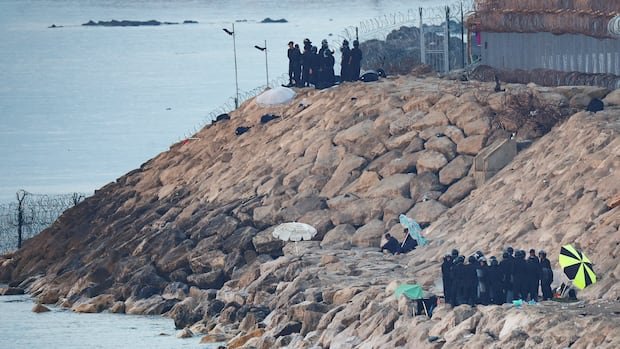

Moroccan authorities apprehended over 100 individuals on Saturday attempting to enter the Spanish enclave of Ceuta, following heightened security measures in response to social media calls for another mass migrant crossing. The incident occurred two weeks after a surge of more than 72,000 migrants entered Ceuta, leading to tensions within the European Union and increased anti-immigration sentiments globally. Among those detained were 109 migrants from sub-Saharan Africa and two Moroccan citizens near Fnideq, the city facing Ceuta.
Reports from Spanish news agency EFE indicated that Moroccan police used tear gas to disperse groups of migrants near the border, with a significant police presence observed in the hills outside Fnideq. The Moroccan Interior Ministry reportedly instructed journalists to leave Fnideq abruptly, without offering a reason.
In Ceuta, Spanish military personnel guarded supermarkets while police maintained a strong presence on the main streets, with the city relatively calmer compared to the aftermath of the recent crossing attempt. Madrid responded by erecting a maritime barrier and deploying additional police forces, totaling over 1,600 personnel in Ceuta. Interior Minister Fernando Grande-Marlaska emphasized the commitment to restoring normalcy and preventing future incidents like the one on July 30.
Approximately 5,000 migrants remained in Ceuta, with plans to return irregular entrants to Morocco except for cases of extreme vulnerability. Moroccan authorities had been monitoring social media posts inciting further crossings and implemented security measures near the border and in other areas like Melilla to prevent unauthorized movements.
Despite efforts to block migrants from leaving cities like Casablanca and Fez, some sub-Saharan Africans were reportedly evading checkpoints by taking alternative mountain routes. Witnesses observed schools in Fnideq repurposed to accommodate security forces near the border.
Young individuals who had previously crossed into Ceuta advised against further attempts, highlighting the challenges and dangers of irregular migration. Adil Jamil cautioned that continued crossings would not lead to solutions but rather exacerbate the situation. He mentioned that organized groups plan these crossings, gathering in Fnideq to increase their numbers for solidarity and strength.
The situation in Ceuta remains complex, with ongoing efforts to manage the migrant population and prevent future mass border crossings.