

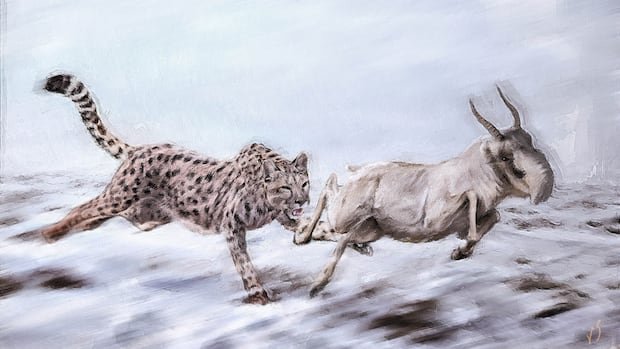

A recent discovery in the Bluefish Caves and a mine site in northern Yukon initially led researchers to believe they had uncovered bones from an ice-age puma or cougar. However, DNA analysis conducted by Molly Cassatt-Johnstone from the University of California revealed a surprising twist. Cassatt-Johnstone, a lab technician fresh out of her undergraduate studies, was taken aback when her preliminary analysis indicated that the Yukon bones did not match those of pumas.
Paleontologist Grant Zazula vividly recalls the moment he received the unexpected news: the so-called cougars were, in fact, cheetahs. This revelation marked a significant advancement in ancient DNA analysis, which was once considered science fiction but has now become a routine practice in studying permafrost-preserved bones from the Yukon.
Cassatt-Johnstone’s groundbreaking identification of a Yukon Miracinonyx, known as the extinct American cheetah, has led to her being the lead author of a paper published in Current Biology. The study sheds new light on the ice-age cat’s dietary habits and habitat range, presenting a compelling detective story for researchers.
Contrary to previous beliefs that the American cheetah hunted pronghorns in grassy plains, the discovery of these creatures in the Arctic tundra puzzled paleontologists. Beringia, the land that once connected Asia and North America, including parts of Russia and the Yukon, served as the habitat for Miracinonyx. To unravel how these cheetahs survived in such a harsh environment, researchers conducted stable isotope analysis, unveiling that the Yukon cheetahs primarily fed on fish, a behavior uncommon among past and present-day cats.
The study’s findings stunned experts like Julie Meachen, a specialist in mammalian carnivores from the Late Pleistocene. She emphasized the distinct behavior of Yukon cheetahs compared to their counterparts in midcontinental North America, suggesting that the abundance of Yukon salmon might have played a crucial role in their survival amidst competition from larger predators.
Through extensive DNA analysis, researchers determined that Miracinonyx shared genetic similarities with North American pumas rather than African cheetahs. The study also highlighted the low genetic diversity and population numbers of these cheetahs, factors that may have contributed to their eventual extinction.
Grant Zazula proposed renaming this unique northern population from ‘American Cheetah’ to ‘Yukon Cheetah,’ emphasizing the importance of every bone discovery in unraveling new stories from the past. The study underscores the significance of ongoing research efforts in uncovering the mysteries of ancient species.