


Parts of British Columbia are experiencing severe drought conditions this summer. Water restrictions have been imposed in Bessette Creek to safeguard salmon populations from critically low water levels. Temporary protection orders for the Salmon River watershed were initially issued in late July, lifted briefly in early August due to heightened wildfire risks, and then reinstated at the end of August.
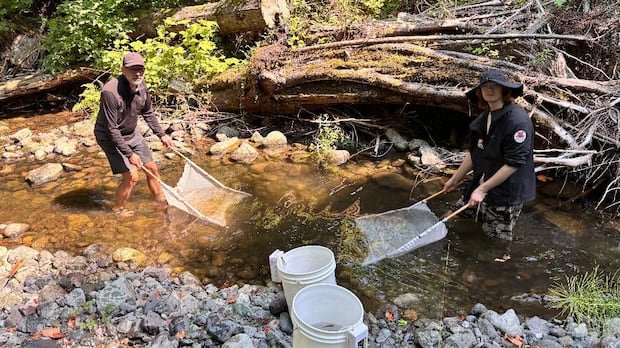
Bob Crandall, treasurer of the Cowichan Lake Salmonid Enhancement Society, notes a concerning trend of diminishing water levels in the streams connected to Lake Cowichan that the society oversees. To mitigate the impact, the society conducts fry salvage operations, where fish are rescued from drying rivers and relocated to other water bodies.
While these intervention efforts are being embraced by B.C. communities as a necessary measure, scientists caution that their effectiveness is limited and may not offer a sustainable long-term solution. The collaboration between Crandall, the Ts’uubaa-asatx Nation, and volunteers focuses on relocating various fish species, such as salmon, trout, and char, to areas with more water.
The challenges of fry salvage are exacerbated by climate change, with streams drying up further upstream than in previous years. The process involves using aerators and nets to transport the fish, which can be physically demanding, especially in hot weather conditions. Crandall, with his background in fishery, emphasizes the importance of preserving fish populations within the ecosystem.
The Ts’uubaa-asatx Nation plays a crucial role in the fry salvage initiatives, employing drones to identify drying streams and assisting in the relocation of fish. The community views salmon conservation as a fundamental aspect of their heritage and invests resources in recovery projects to ensure the sustainability of salmon populations for future generations.
Similar challenges are being faced in France, where severe drought conditions have impacted fish relocation efforts. The Fédération de Pêche du Rhône highlights the unprecedented nature of this year’s weather events, emphasizing the need for ecosystem restoration and adaptive water management strategies over short-term interventions like fish rescues.
The adverse effects of climate change, including elevated water temperatures and reduced river flows, pose significant threats to fish populations. Long-term solutions focusing on ecosystem health and sustainable water management are deemed essential to address the impacts of drought and ensure the survival of fish species in the face of changing environmental conditions.