

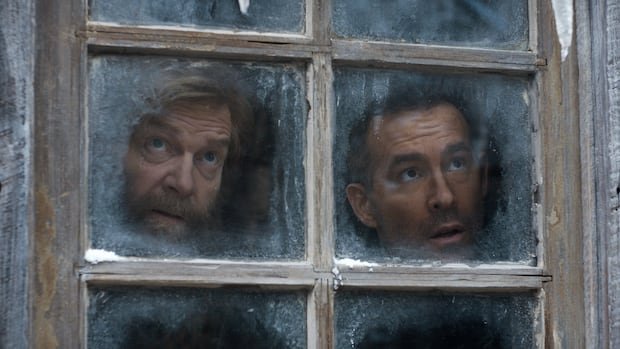

In a bizarre twist, the need to acknowledge the humanity of others continues to be a recurring revelation. The narrative of “Mayday,” set in the 1980s, revolves around an American and a Soviet soldier, exploring the notion that individuals from conflicting nations can possess empathy and altruism beyond stereotypical perceptions.
The story unfolds as ex-KGB agent Nikolai (played by Kenneth Branagh) saves U.S. navy pilot Troy (portrayed by Ryan Reynolds) after a crash, challenging preconceived notions. Despite Nikolai’s purportedly benevolent motives, skeptics question his true intentions amidst Cold War tensions and personal obligations.
The film subtly challenges the assumption that foreigners are vastly different from Americans, portraying them as equally genuine and complex. “Mayday” skillfully blends action and comedy, showcasing the charismatic performances of Branagh and Reynolds in an unlikely partnership.
Directors Jonathan Goldstein and John Francis Daley capture the essence of the narrative through nuanced camerawork, juxtaposing intense action sequences with serene visuals. The movie’s approach contrasts with the fast-paced editing prevalent in contemporary cinema, opting for a more deliberate and focused style.
While “Mayday” echoes themes seen in past productions like “Stranger Things,” it navigates the fine line between entertainment and propaganda. The film prompts viewers to reconsider Cold War stereotypes and acknowledges the shared humanity between opposing sides.
Ultimately, “Mayday” stands out as a mainstream film that challenges simplistic perceptions of good versus evil in historical conflicts. It subtly reminds audiences that recognizing the humanity in others is not a revelation, but a fundamental truth we should never forget.