

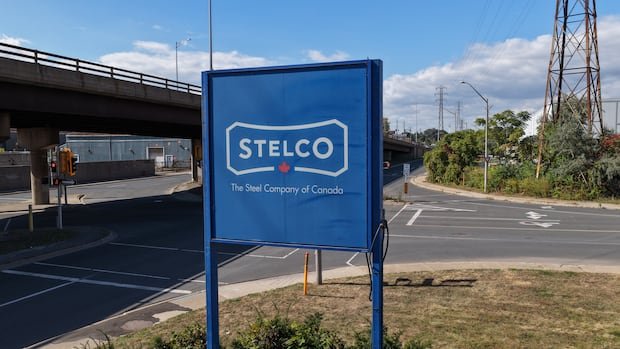

The CEO of the parent company of Stelco in the United States has stated that they will take legal action if Ottawa decides to sue following the announcement of production shutdown at a steel mill in Hamilton, leading to potential layoffs of up to 500 employees, partly due to the ongoing trade tensions between Canada and the U.S.
This statement comes in response to Prime Minister Mark Carney’s declaration that the Canadian government will exhaust all available legal measures against Cleveland-Cliffs as they actively pursue legal actions against the Ohio-based company.
In a recent interview with CBC News, Cleveland-Cliffs CEO Lourenco Goncalves emphasized that Stelco’s ability to sell steel produced in Hamilton to U.S. buyers was a critical condition agreed upon during the company’s acquisition in 2024, which included commitments to maintain substantial employment levels and operations in Hamilton.
Despite the trade dispute, the Canada-U.S.-Mexico Agreement (CUSMA) was already in effect at the time of the acquisition, ensuring certain trade provisions. Goncalves expressed that the ability to sell steel in the U.S. was pivotal for the acquisition and highlighted his reluctance to engage if he had foreseen the deteriorating trade relations between the two countries.
While the trade war persists, CUSMA remains valid until 2036, even though the U.S. halted negotiations for a renewal in July.
Goncalves defended his actions as a responsible business owner in response to Carney’s criticisms and mentioned that he would address the legal challenges in court once presented with a lawsuit.
The decision to cut up to 500 jobs at Stelco was directly attributed to the trade conflict initiated by President Donald Trump, who imposed hefty tariffs on foreign steel imports under Section 232 of the Trade Expansion Act, prompting Canada to retaliate with tariffs on U.S.-made steel products.
Goncalves clarified that the influx of foreign steel imports to Canada has impacted the market for Stelco’s cold-rolled steel production, leading the company to focus on hot-rolled products due to market pressures and lack of viable orders.
Despite claims of no existing orders, sources within Stelco revealed that the company has potential customers seeking to place orders, indicating ongoing market demand. However, Goncalves emphasized that the issue lies in the insufficient volume of orders at economically viable price levels.
Carney suggested financial support to mitigate the trade war’s consequences, but Goncalves stressed that the fundamental challenge lies in the uncertain trade landscape between Canada and the U.S., stating that financial aid cannot resolve the underlying trade uncertainty.