

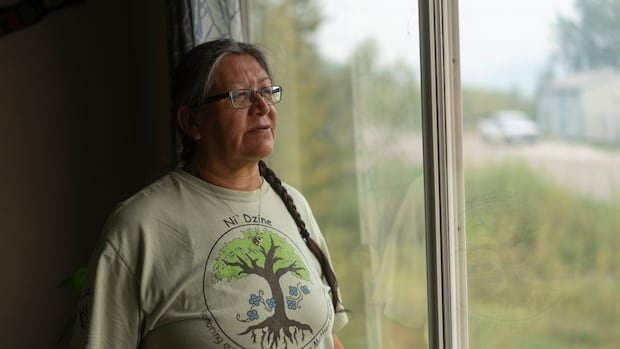

In Fort McKay, a community nestled in the heart of the Alberta oilsands region about 55 kilometers north of Fort McMurray, concerns over dust pollution loom large. Jean L’Hommecourt, a former environmental manager for the Fort McKay First Nation, often observes a haze of thick dust obscuring the horizon as it drifts from nearby mines and industrial activities.
Recent research published in Atmospheric Pollution Research sheds light on the significant dust pollution burden faced by Fort McKay, surpassing regulatory air quality standards on a regular basis. Led by University of Toronto PhD candidate Kristin Iorio and Alberta-based independent researchers, the study reveals that the community experiences intense dustfall events primarily driven by coarse particles of dust, a phenomenon not adequately captured by standard monitoring methods.
During a 24-month sampling period, Fort McKay recorded elevated monthly dustfall levels, exceeding Alberta Ambient Air Quality Guidelines numerous times and frequently doubling the acceptable thresholds. The data, collected by the Wood Buffalo Environmental Association and the Fort McKay Sustainability Department using various monitoring tools, highlighted the community’s heightened exposure to dust pollution compared to neighboring areas.
The research underscores a regulatory gap in Alberta’s monitoring framework, which currently focuses on regulating PM2.5 levels (fine particulate matter) but lacks specific rules for larger particles like PM10. These coarse particles, originating from industrial sources such as mining operations and construction activities, pose health risks yet remain unregulated, emphasizing the need for enhanced monitoring and updated air quality objectives.
To address these concerns, the study advocates for revised monitoring practices and the establishment of formal guidelines to address the impact of large particulate matter on communities like Fort McKay. Ke Du, an expert in air quality research at the University of Calgary, supports the call for expanded monitoring efforts to capture episodic industrial pollution events that conventional methods overlook.
The study’s findings call for urgent action to safeguard the health of residents in Fort McKay and other impacted communities, urging authorities to reevaluate monitoring approaches and air quality standards in response to the growing threat of dust pollution.