

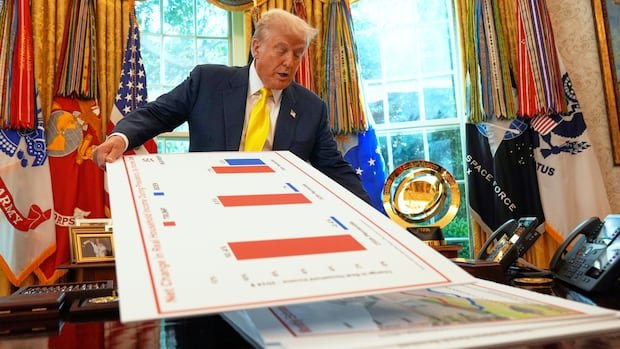

In his state of the union address in March 2025, U.S. President Donald Trump expressed optimism about the economic benefits of tariffs, predicting vast revenue generation and job creation on an unprecedented scale. However, the promised job growth has not materialized, and the U.S. national debt has surged past $40 trillion, leading to concerns in the financial market and maintaining high interest rates.
While tariffs have brought challenges for some, they have also resulted in significant gains for certain groups, particularly the wealthy and well-connected corporations. Economists point out that tariffs have led to a notable wealth transfer from lower-income and middle-class individuals to affluent businesses within the U.S.
The implementation of tariffs aligns with the broader economic strategy of the Trump administration and the Republican Party, aiming to achieve similar outcomes as tax policies. These efforts include reducing income taxes in red states and increasing sales taxes, further contributing to wealth concentration.
Tariffs, by design, disproportionately impact lower-income households who allocate a larger portion of their income toward consumption. This contrasts with high-income individuals who spend more on services and non-tariff-affected goods. The result is a regressive tax burden where the wealthy benefit more significantly from tariffs.
Moreover, the arbitrary nature of tariff exemptions and rebates in the U.S. has amplified the wealth concentration effect. Recent reports indicate that businesses have received substantial refunds due to tariffs, with major corporations like Walmart and Target being among the primary beneficiaries.
The process of granting tariff exemptions has displayed political favoritism, with companies linked to political contributions receiving preferential treatment. This has raised concerns about transparency and fairness in the tariff exemption system, potentially disadvantaging small businesses and individual consumers.
While some corporations have pledged to pass on tariff refunds to customers, economists remain skeptical about the trickle-down effect benefiting consumers. Studies suggest that U.S. buyers bear the majority of the tariff costs, with minimal relief reaching the general populace.
Despite the initial promises of job creation and economic rejuvenation, the actual impact of tariffs has been underwhelming, with negative trends in manufacturing and employment persisting. The revenue generated from tariffs falls short of offsetting tax cuts for the wealthy, contributing to the growing national debt and interest rate concerns.
In conclusion, the wealth-redistributive effects of tariffs have raised questions about their efficacy and fairness, prompting calls for alternative revenue-raising strategies to address economic challenges in the U.S.