

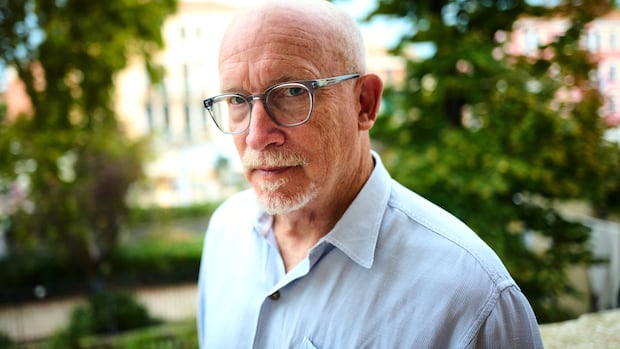

The nearly four-hour documentary Musk, directed by Alex Gibney, presents a stark and unsettling portrayal of Elon Musk, the tech mogul and richest individual globally. Rather than offering inspiration, it stands out as one of the most disheartening and alarming documentaries since An Inconvenient Truth brought widespread attention to the looming threat of climate change.
In contrast to An Inconvenient Truth, Gibney’s Musk seems to lack an optimistic conclusion regarding potential solutions to our current crises. Instead, it lays out a narrative that, in Gibney’s perspective, traces Musk’s evolution from a budding entrepreneur to a political influencer who has been implicated in the disassembly of USAID, and who has even sought to establish a “baby farm” and commune in anticipation of a supposed civil war. This occurs before the film suggests he has destabilized all of Western democracy.
During an interview this September, prior to the film’s premiere at the Toronto International Film Festival, Gibney expressed that he was not surprised by the somber interpretation, especially after receiving threats of defamation lawsuits from an equally discontented Musk. Musk has labeled Gibney as “a shill for the far left,” a “horrible human,” and simply a “douche.”
Gibney recognized the daunting length of the film; it was only after completing the initial two-hour version that Musk aligned himself with U.S. President Donald Trump. At that point, HBO executives advised Gibney that they needed to broaden the scope of the project, framing it as a “foundation for a much more epic narrative… For someone with such significant influence on the planet’s future, it warranted three hours and 45 minutes.”
That dynamic proved to be complex. While the documentary is set to hit North American theaters on October 16, Gibney felt anxious as of the interview date. The international rights-holder, Universal, had yet to confirm plans for distributing the film beyond North America, potentially due to political pressures.
Additionally, he mentioned that Paramount’s acquisition of HBO’s parent company, Warner, with Trump-supporting David Ellison at the helm, left him “concerned in the back of [his] mind” that the film’s streaming release might be jeopardized.
Since the interview, Gibney has reported that discussions regarding international theatrical release are in progress; the documentary is expected to be available for streaming in early 2027, although a precise date remains unannounced. When audiences eventually see it, he hopes their response is less grim.
“It’s not a wake; it’s a warning. But the situation is rather bleak. If we aren’t cautious, we could be plunged into chaos,” the director stated, while acknowledging the pervasive sense of dread that his film evokes. “The film concludes with Earth exploding and Musk escaping in his spacecraft. So, that’s as pessimistic as it gets.”
A matter of impartiality
Although he initially approached the project as a supporter of Musk — even owning a Tesla solar panel system — by the time he delved into it seriously, he found that any goodwill he had extended to Musk had faded. When he attempted to reach out for an interview with Musk, he encountered a wall of silence.
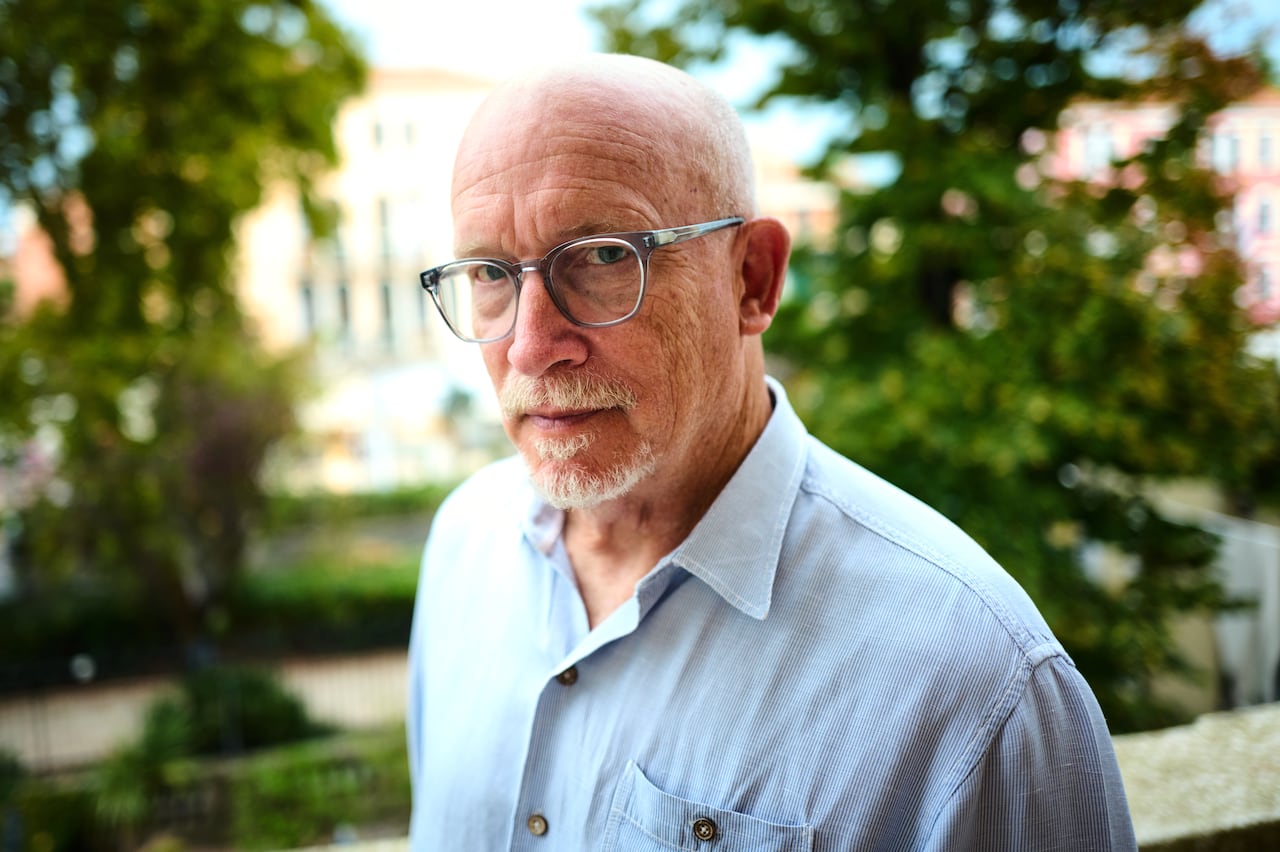
Director Alex Gibney poses for photographs for the film Musk during the 83rd edition of the Venice Film Festival in Venice, Italy, in September 2026. (Scott A Garfitt/Invision/The Associated Press)
Attempts to contact those in Musk’s inner circle were similarly unfruitful: close associates consistently refused to comment without Musk’s consent. The solution was to provide Musk a platform through an AI avatar that articulates many of his own statements.
This AI-generated entity narrates a significant portion of the documentary. Much of its dialogue, including the real Musk’s comments regarding the “hit piece” Gibney produced, presents a sharply critical viewpoint of the documentary’s perspective.
The outcome is a somewhat divided, yet predominantly negative portrayal of a figure Gibney contends is central to the decline of contemporary politics.
The film chronicles Musk’s early career as a self-proclaimed “founder” of PayPal and Tesla — featuring interviews with journalists from that era and Musk’s former wife, Justine Musk — that depict his public image as an engineer and visionary as little more than a PR-forged fabrication.
“There exists a widespread belief in modern cultures that wealth equates to intelligence — that wealth must imply genius,” Gibney asserts, encapsulating the documentary’s core argument. “But perhaps it’s simply a matter of being ruthless. One can be extremely wealthy and influential — yet also somewhat unhinged.”
Additionally, the documentary covers Musk’s tenure at the Department of Government Efficiency (DOGE), portraying him as a key player in the disassembly of the U.S. federal government, according to Gibney’s narrative.
-
TikTok, X reportedly barring ads for documentary about Elon Musk
-
Elon Musk calls documentary about him a ‘hit piece’ after buzzy debut
The film also features claims from former MAGA influencer Ashley St. Clair, who is the mother of one of Musk’s children, discussing obscure texts Musk sent her prior to the 2024 U.S. presidential election that led to Trump’s re-election — messages that reference an “anomaly in the Matrix” caused by “ten thousand lasers in space.”
Gibney then questions her on whether she believes this alluded to SpaceX satellites. Her response was: “I can’t think of any other place he would have lasers.”
“I must clarify that the comments regarding the ‘anomaly in the Matrix’ and lasers from space did not originate from a Musk critic. They came from Elon Musk himself,” Gibney stated.
Despite this, a letter sent to Gibney’s Jigsaw Productions claimed that the exchange supports a debunked conspiracy theory suggesting Musk utilized his internet service, Starlink, to interfere with voting machines in pivotal states.
“That appears to be a relevant point to include in a film,” Gibney asserted. “I don’t assert in the film that this is what he did. I merely state that it has been claimed.”
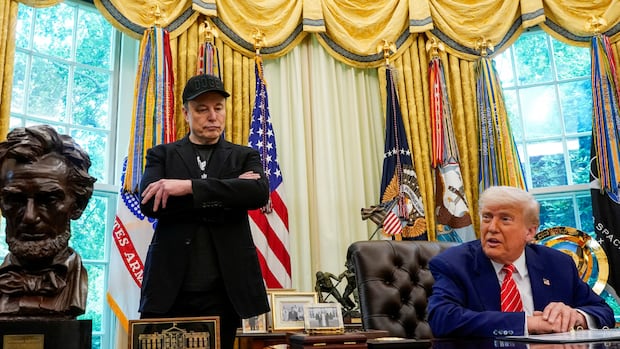
Elon Musk is leaving his special government role as a top adviser to U.S. President Donald Trump. His departure, announced Wednesday, marks the end of a turbulent chapter that included thousands of layoffs and the removal of government agencies. Musk says he still plans to act as a consultant despite his decision to step down.
Similarly, when confronted, Gibney justified the inclusion of an AI-created avatar in a documentary critical of an AI advocate: “We employed some AI methods, but these are directed by human oversight,” he explained. He noted that the intention was for it to act as a type of “agent provocateur,” provoking a negative response to the spread of AI by compelling viewers to confront it.
When asked if he wishes or speculates that the film might influence voter behavior in the upcoming U.S. midterms, his answer is straightforward: “I do.”
For Gibney, Musk’s concentration of power represents more than just a failing on Musk’s part. When “a reckless tech billionaire effectively commandeers the federal government and tries to dismantle it for personal gain,” he asserts, it is the American public that must take some responsibility.
“We did. We allowed him to take control because we failed to demand accountability from our representatives,” he remarked.
“You know, ‘Oh, I enjoy my Tesla, so he must be a good person.’ Well, you might appreciate your Tesla. But what if he’s not a good person, right?”