

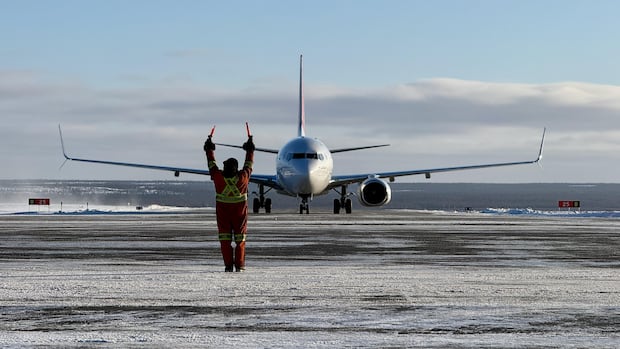

A minimum of 18 airlines have approached the federal authorities, requesting an extension of their pilots’ maximum flight duty periods by an additional hour each day. They argue that the existing regulations hinder their ability to handle the frequent delays that affect air travel in Northern regions.
This proposal has met with strong resistance from the nation’s leading pilots’ union, which warns that it could result in more exemptions and escalate pilot fatigue to hazardous levels.
As per the exemption requests submitted earlier this year to Transport Canada, the daily flight duty maximum — the span from arriving at work to the final engine shutdown — would increase from 13 hours to 14 hours. The weekly cap would also rise from 60 hours to 70 hours.
Ultimately, pilots could be permitted to work up to 210 hours within a 28-day cycle, an increase from the current limit of 192 hours.

Inside the cockpit of an Air Inuit B-737 in northern Quebec. (Jonah Schantz/Air Inuit)
The requesting airlines mainly operate in the country’s most isolated areas. They contend that the air travel regulations established in 2020 do not accommodate the erratic weather and underfunded airport infrastructures prevalent in the North.
They wish for these modifications to be integrated into draft regulations currently being developed by Transport Canada to offer greater flexibility to air operators.
“It was a one-size-fits-all approach, which cannot be the solution,” remarked Bernard Gervais, the executive director of the Northern Air Transportation Association.
“We are advocating for the rules to be tailored to the scale of the operator and the nature of their operations.”
Experts in sleep research indicate that a significant level of fatigue can be akin to impairment from alcohol, a serious concern when it comes to operating an aircraft.
Indicators of fatigue include lapses in short-term memory, delayed reaction times, and a diminished capacity to prioritize tasks or evaluate risks.
At the core of the argument between airlines and pilots is the maximum number of work hours deemed safe.

Tim Perry, president of ALPA Canada, the principal pilots’ union in the country, warns that longer pilot hours carry significant risks. (Justin Tang/The Canadian Press)
“You need to listen when we express that the changes being considered are potentially very unsafe,” stated Tim Perry, president of ALPA Canada, representing over 10,000 pilots nationwide.
“In our professional evaluation, this appears to be driven by profit motives.”
The regulations in Canada are complex and depend on various factors, including departure and arrival times, the number of flight segments, and the number of days off spent at home.
While a fatigue risk-management system is already in place to provide carriers some flexibility, it is a complicated and expensive process, particularly for smaller airlines.
ALPA Canada comprises pilots from some of the airlines seeking exemptions, though several regional operations do not have union representation.
“If one airline receives an exemption, it will be perceived as a competitive edge,” Perry warned. “This could lead to a cascade of additional exemptions, making it challenging to establish clear boundaries.”
The National Airlines Council of Canada, representing major airlines including Air Canada, WestJet, Air Transat, and Jazz, declined to comment on the proposed alterations.
When Canada instituted stricter regulations in 2020 to oversee pilots’ schedules and align the country’s guidelines with international standards, many airlines criticized these measures from the outset.
They claimed the rules compelled them to recruit additional pilots and obstructed their ability to respond to unpredictable situations like fog, flat tires, or runway closures.
“In remote communities, when these disruptions result in flight cancellations instead of delays, the consequences are significant,” noted Joe Sparling, president of Air North, based in Yukon.
“If a medical passenger needs to travel south for an appointment and the flight is delayed by a day, their appointment must be rescheduled.”
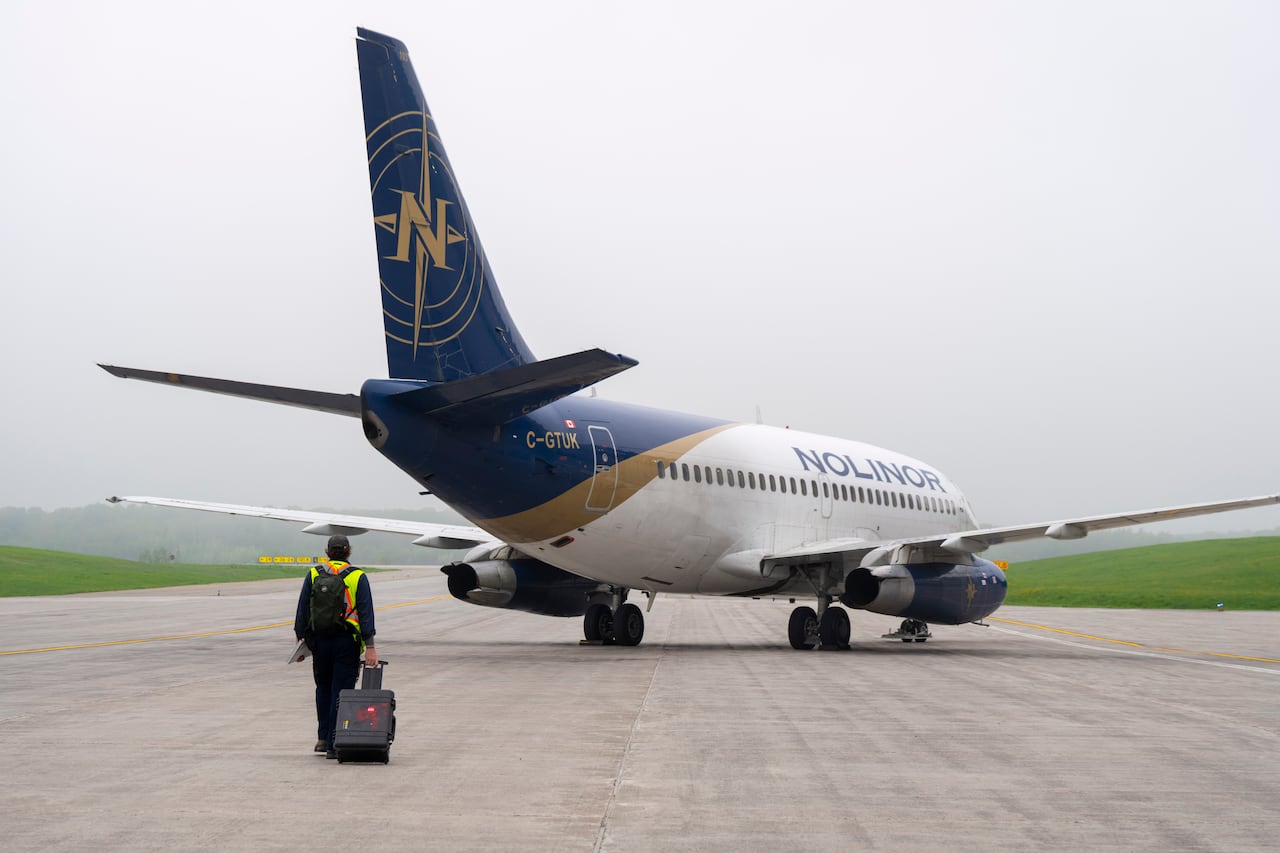
A mechanic approaches a Nolinor Aviation aircraft in Mirabel, Que., last year. The airline argues that the realities of flying in the North necessitate different regulations. (Christinne Muschi/The Canadian Press)
Nolinor, which focuses on charter flights, states it must position pilots in Val d’Or, Que., to ensure that delays in the North do not prevent the regular crew from returning south.
“The regulations were not crafted to reflect the conditions in the Arctic,” said Yves Bergeron, Nolinor’s vice-president of operations. “The situation in Montreal is not comparable to that in Iqaluit.”
According to several sources involved, the draft regulations from Transport Canada have encountered delays, and the next steps hinge on federal Transport Minister Steven MacKinnon.
“It’s highly political. The minister will ultimately make the decision,” Gervais from the northern carriers’ association stated.
The pilots’ union is urging the minister to reject the proposed changes to maximum flight duty hours.
MacKinnon’s office indicated that Transport Canada officials are still reviewing the issue.
“The safety of civil aviation operations is the department’s highest priority, and it remains committed to maintaining stringent and effective oversight across the entire system,” said spokesperson Philippe-Alexandre Langlois.
Fatigue already a risk: experts
Matthew van Wollen, a Canadian fatigue expert working with Pulsar Informatics in the U.S., asserts that there are methods to extend Canadian pilots’ shifts safely by adopting “simpler and more unique operating profiles.”
He has collaborated with Transport Canada and various Canadian airlines but asserts that his statements are grounded in scientific data.
He outlined three elements that contribute to fatigue: whether the work schedule extends into the late night, the total length of the shift, and any existing sleep deficits.
With fuel prices more than doubling since the war in the Middle East began, one of the main places Canadians may feel the war’s impact is air travel. The head of the International Energy Agency says Europe has ‘maybe six weeks or so [of] jet fuel left.’ CBC’s Ashley Fraser speaks to travel experts about what to expect over the next few months.
Van Wollen suggested that many pilots might prefer to work longer hours over several consecutive days, allowing them to enjoy more time off afterward.
He emphasized that managing fatigue risk should be a daily priority for carriers.
“Following the rules does not guarantee safety. It does not eliminate fatigue,” he remarked.
Clinton Marquardt, another sleep expert, noted that establishing parameters for each airline in collaboration with their pilots would be beneficial.
“That is the only way to achieve a satisfactory resolution,” indicated Marquardt, a former official with the Transportation Safety Board.
While he acknowledged that “operational needs and workforce desires” should not be overlooked, he asserted that they are not the “foundation of the system.”
He insisted that scientific evidence must guide the formulation of appropriate rules.
Airlines assert that their pilots always have the option to cancel flights if they feel overly fatigued. They also express a willingness to monitor how any alterations to pilot schedules impact operations and make necessary adjustments.
“We do not intend to schedule 14-hour shifts every day,” said Jonathan Lukca, operations manager at Air Inuit.
“Once the limit is reached, safety may be compromised, and pilots could leave for other opportunities. That is not in anyone’s best interest.”