

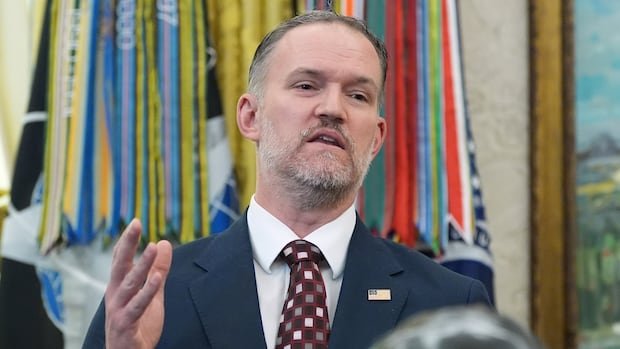

U.S. Trade Representative Jamieson Greer mentioned that U.S. President Donald Trump and Prime Minister Mark Carney will receive “options” post trade discussions between Canadian and U.S. trade officials that took place on Thursday. Greer highlighted that both leaders will engage in talks to explore potential avenues. The meetings were described as positive and friendly by Greer, who spoke exclusively to CBC News after the discussions. Greer also mentioned that there will be further communication with the president and anticipated Canadian officials to engage with the prime minister.
Following the meeting, Canada-U.S. Trade Minister Dominic LeBlanc expressed his commitment to fulfilling the expectations of Canadians. LeBlanc did not specify a timeline for future meetings with Greer but stated that they would have as many meetings as necessary. Moreover, LeBlanc is scheduled to update the federal government’s Advisory Committee on Canada-U.S. Economic Relations on the negotiation progress, as per sources familiar with the upcoming meeting.
In addition, LeBlanc is set to brief provinces on Friday, with Quebec’s envoy for the review of the CUSMA, Louise Blais, sharing this information during a Radio-Canada interview. Both LeBlanc and chief trade negotiator Janice Charette engaged in discussions with Greer, marking the second meeting of the week and the fourth within three weeks. The discussions intensified after Trump’s threat to impose 50% duties on numerous Canadian goods in addition to existing sectoral tariffs, set to be enforced on August 19.
Furthermore, sources revealed that the American side proposed adjustments to some sectoral tariffs on Tuesday, which fell short of Canadian expectations. The U.S. is also aiming for a deal encompassing preferential access to Canadian critical minerals, along with security and energy considerations. LeBlanc and Greer are working towards presenting a potential trade deal to Trump by Monday.
Despite the ongoing negotiations, the Canadian side has emphasized that there would be little support among Canadians to continue talks if the August 19 tariffs are implemented. These tariffs are linked to various trade disputes, including Canada’s response to U.S. trade policies affecting alcohol sales and alleged discrimination against U.S. motor vehicles and dairy products. Industry sources suggest that Canada is willing to address these concerns by making concessions, such as lifting the booze bans and modifying tariffs on U.S. autos and dairy products.
Ontario Premier Doug Ford expressed willingness to reintroduce U.S. alcohol to Ontario shelves upon reaching a fair deal that safeguards key sectors like steel, auto, forestry, agriculture, and manufacturing. Ford highlighted that tariffs on Canada equate to taxes on American citizens. He emphasized the need to send a message during the U.S. midterms. Quebec’s stance on U.S. alcohol bans aligns with Ontario’s position, emphasizing that decisions regarding alcohol sales fall under provincial jurisdiction and will be made in Quebec’s best interest.