

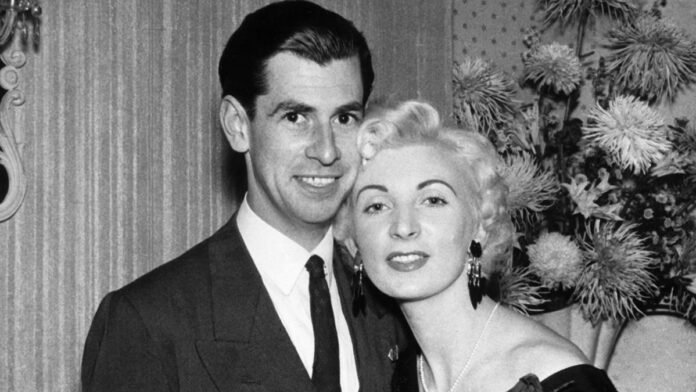

Ruth Ellis, known for her intense involvement in a criminal act, holds a unique place in history as the final woman to face the death penalty in the UK, sparking widespread public outrage. The 28-year-old nightclub hostess and mother of two fatally shot her lover, David Blakely, a racing driver, outside a pub in Hampstead, northwest London, driven by jealousy.
Their tumultuous and violent relationship unfolded in the vibrant but shadowy world of 1950s London. On an Easter Sunday in 1955, Ruth ambushed Blakely outside the Magdala pub. In a moment of heated emotion, she drew a .38 Smith & Wesson revolver from her purse and fired five shots. Despite a missed first shot, she relentlessly pursued Blakely, hitting him with subsequent bullets until he lay motionless on the ground.
During her trial at the Old Bailey, Ruth openly admitted her intent to kill Blakely. The swift 20-minute jury deliberation led to her conviction, with the judge donning the black cap to signify her death sentence.
The case stirred significant controversy, with over 50,000 individuals petitioning the Home Office for clemency. Ruth’s emotional turmoil and mistreatment by Blakely generated sympathy, leading many to anticipate a commuted sentence. However, despite the public outcry and numerous pleas for reprieve, Ruth met her fate on July 13, 1955, at Holloway prison, where executioner Albert Pierrepoint carried out her hanging.
Her execution drew crowds outside the prison, with a mix of solemn onlookers and praying individuals. Inside, Ruth received last rites and a final drink before her execution. Her calm demeanor during the process was noted in contemporary reports, fueling ongoing public opposition to the death penalty. The significant public backlash eventually contributed to the abolition of capital punishment in the UK, with Ruth Ellis remaining the last woman subjected to such a fate.
After her execution, Ruth was initially buried in an unmarked grave at the prison grounds, later reinterred in Amersham. Tragically, her family endured further tragedies following her death. Her ex-husband George took his own life in 1958, while her mother Bertha suffered a failed suicide attempt, resulting in speech impairment. Ruth’s children also faced challenges, with her son Andy struggling with mental health issues and ultimately taking his own life in 1982. Similarly, her daughter Georgina’s life was marked by instability and early death from cancer at the age of 50.
The enduring legacy of Ruth Ellis’s case underscores the profound impact it had on public perception of the death penalty, ultimately leading to its abolition in the UK.