

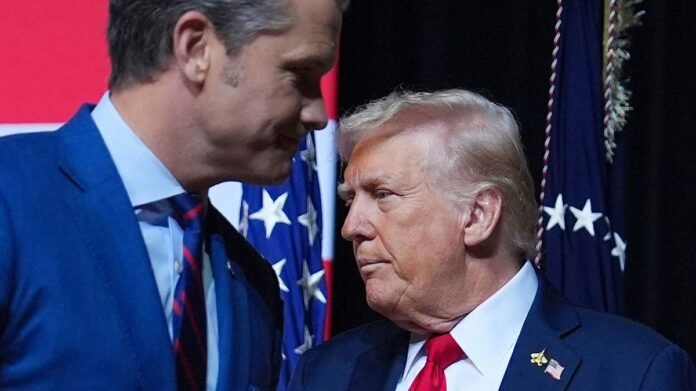

In a concerning development, President Donald Trump has called on top US military officials to assist him in combating what he referred to as “internal adversaries,” marking an alarming escalation in his ongoing conflict with political opponents.
During a hastily assembled gathering, numerous high-ranking generals were assembled to hear the President’s contentious address, with many coming from various conflict zones worldwide. Once there, they were subjected to harsh criticism and intimidation by “Secretary of War” Pete Hegseth, who demanded strict adherence to physical fitness standards and vowed to discard what he deemed as restrictive rules of engagement.
Trump also hinted at the possibility of deploying more military forces domestically, straying from the traditional role of past Presidents and potentially violating established laws. He emphasized the historical precedent of using the military for maintaining order and peace, while simultaneously criticizing past administrations for limiting military involvement.
Notably, the utilization of the military for domestic policing has been prohibited since 1878 under the Posse Comitatus Act. Trump’s remarks about addressing issues in cities like San Francisco, Chicago, New York, and Los Angeles raised further concerns about his intentions.
The President’s speech was met with unease, as he warned military leaders that dissent would not be tolerated, hinting at repercussions for those who disagreed with him. This rhetoric underscored a troubling shift towards politicizing the military and raising questions about the boundaries between civilian and military authority.
As the situation unfolds, concerns persist over the implications of Trump’s statements on military involvement in domestic affairs, prompting scrutiny and debate over the appropriate role of the armed forces within the country.