

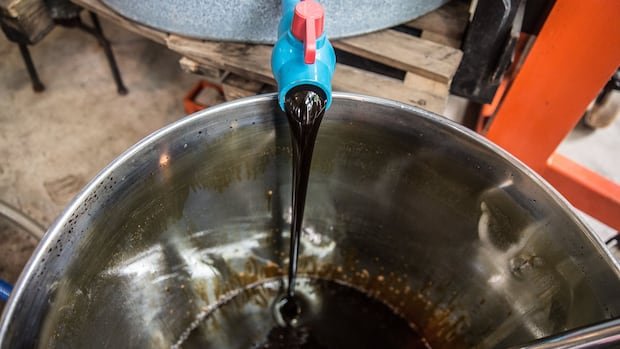

Amid ongoing trade tensions between the U.S. and Canada during President Donald Trump’s second term, a recent U.S. decision to ban Canadian molasses imports has reignited concerns over sugar smuggling and triggered a clash within the industry that involves a prominent refinery in Hamilton, Ontario.
The ban, set to be enforced starting September 29 alongside restrictions on motorcycles, select alcoholic beverages, and certain dairy products, follows persistent efforts by American sugar producers to urge their government to impose higher tariffs on foreign sugar goods, citing stiff competition from cheaper alternatives from overseas.
The focus of the issue revolves around Canadian refineries, which are accused by American producers of importing blends of raw sugar, molasses, and water while falsely labeling them as pure molasses to evade sugar tariffs and quotas.
At the recent International Sweetener Symposium held in Vail, Colorado, Sugaright, a division of Connecticut-based refiner CSC Sugar, highlighted the urgency to halt the influx of diluted Canadian molasses into the U.S., emphasizing the need to prevent what they see as circumvention tactics in the sugar industry.
The roots of the problem trace back to a historical case in the 1990s involving a Michigan-based company, Heartland By-Products, which mixed molasses with sugar and water in an Ontario facility to import the concoction duty-free. Despite the legality of this operation at the time, industry pressure and legal constraints eventually forced the company to cease operations.
Although claims persist about disguised molasses entering the U.S. from Canada, findings from the U.S. Department of Agriculture’s World Agricultural Supply and Demand Estimates report from August suggest a significant decline in molasses imports for sugar extraction, with projections indicating minimal imports for the upcoming year.
Sucro Can Sourcing, chaired by Don Hill, finds itself at the center of the accusations, with Hill asserting that his company is being unfairly targeted. Despite approvals from U.S. Customs and Border Protection for its molasses imports under the Harmonized Tariff Schedule in 2020, Sucro faced scrutiny after a USDA study raised concerns about potential tariff evasion through additives or blending in Canadian molasses.
Hill refuted the study, challenging its accuracy and requesting a retraction, but has received no substantial response from the USDA. The ongoing trade tensions have prompted Sucro to halt molasses imports to the U.S. following the completion of a new refinery in Hamilton.
The American Sugar Alliance, representing major U.S. sugar producers and refiners, lauded the molasses import ban as a measure to ensure compliance with trade laws and protect American interests. Meanwhile, the lobby’s influence in the sugar industry has drawn attention, with experts highlighting the sector’s history of navigating tariffs and political pressures to safeguard profits.
Although the rationale behind the molasses import ban remains unclear, experts suggest that protectionist actions in the sugar industry mirror similar trade disputes, like those involving Canada’s dairy sector, and emphasize the potential impact of lobby groups in influencing policy decisions during times of trade tension.