

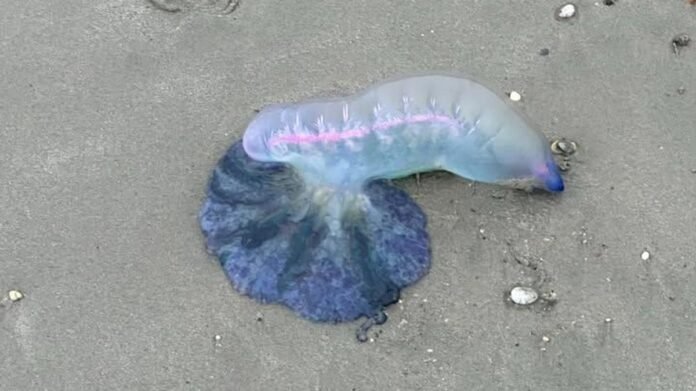

British beach visitors have been alerted following the appearance of numerous Portuguese man o’ war along the UK coastline. These jellyfish-like creatures were spotted in various locations along the Cornish coast, with one described as exceptionally large.
Portuguese man o’ war, known for their large size and unique appearance, possess a venomous sting that can cause severe pain and skin welts. Despite typically inhabiting tropical waters, these creatures have been increasingly found near British shores.
There have been documented cases of fatal man o’ war stings resulting from allergic reactions. Recent sightings prompted warnings from authorities, urging caution for swimmers and beachgoers.
Reports of these creatures washing up on beaches like Sennen Beach have raised concerns among locals. Amanda Duffin reported encountering sizable Portuguese man o’ war on Longrock beach, emphasizing the need for vigilance, especially for dog walkers.
These creatures, often mistaken for jellyfish, are actually a rare species called ‘zooids.’ Identified by their purple float, blue-purple tentacles, and pink-tipped crest, they may appear translucent when washed ashore.
Matt Slater, the Marine Conservation Officer for Cornwall Wildlife Trust, advised individuals to avoid contact with Portuguese man o’ war due to their painful stings. If stung, immediate action such as rinsing with seawater and seeking medical assistance is recommended.
Additional warnings were issued in Wales after similar sightings of these creatures on Porth Trecastell beach near Caernarfon. Experts clarified that these creatures are mauve jellyfish, comprising a small percentage of jellyfish sightings in the UK.
Authorities urge the public to be cautious and avoid touching these creatures, even when they appear lifeless, as their stings remain potent. Increased awareness and proactive measures are essential to prevent potential harm from encounters with Portuguese man o’ war.