

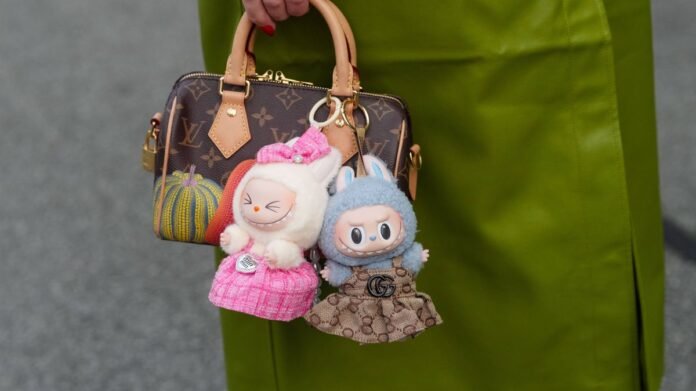

Labubus, the popular shark-toothed toys that took over social media screens and fetched impressive prices at auctions, seem to be losing their appeal. Recent reports indicate a decline in the company’s stock price and a decrease in resale values for these once highly sought-after items. Despite this downturn, concerns are rising about the potential environmental impact of these toys, with fears that a significant number may end up in landfills.
The Chinese company behind Labubus, POP MART, has not disclosed exact sales figures but has reported substantial revenue from these quirky dolls. However, the materials used in manufacturing, such as PVC and polyester fabric, raise environmental red flags. PVC, in particular, is known to release harmful toxins during production and disposal, posing risks to ecosystems and human health.
Moreover, the packaging method for Labubus, sold in blind boxes with individual plastic and cardboard wrapping, adds to the waste generated. The mixed materials and coatings in these packages make them non-recyclable, contributing to the already pressing issue of plastic pollution. As history has shown with past viral trends like Sonny Angels, the environmental footprint of these toys could persist for centuries, highlighting the need for more sustainable practices in the toy industry.
The broader conversation extends beyond Labubus, as consumer trends towards disposable products raise concerns about unnecessary waste generation. As the global community grapples with the escalating challenges of plastic pollution and environmental sustainability, the fate of Labubus serves as a reminder of the long-lasting impacts of short-lived trends. Efforts to promote reuse, recycling, and eco-friendly materials in consumer goods are crucial in mitigating the environmental consequences of mass-produced items like Labubus.