

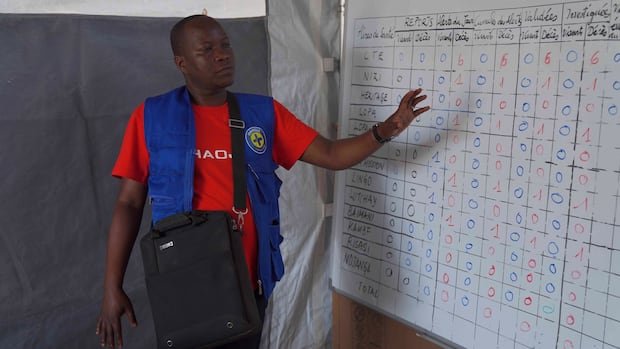

Government data released on Sunday revealed that the Ebola outbreak in the Democratic Republic of Congo has claimed the lives of 2,325 individuals, making it the deadliest outbreak in the country’s history, surpassing the toll from the 2018-2020 outbreak. The latest report from the D.R.C.’s public health institute indicated a total of 4,945 confirmed cases, including 101 new cases identified in the preceding 24 hours.
This outbreak, the 17th in the country, has already set a record for the highest number of cases. The most recent government figures show that the death toll has exceeded the 2,299 fatalities recorded during Congo’s 2018-2020 outbreak, previously the country’s most severe on record. The current data also confirms 4,945 confirmed cases of the virus.
Three months since its official announcement, the outbreak is now second only to West Africa’s 2014-2016 Ebola outbreak, which recorded 28,616 cases and 11,310 deaths across Guinea, Liberia, and Sierra Leone, according to the World Health Organization. It took nearly five months for the West Africa outbreak to reach 1,000 deaths, while Congo’s current outbreak reached 2,000 deaths in less than three months.
The current outbreak, caused by the Bundibugyo species of Ebola, lacks approved vaccines or treatments. The outbreak has gained momentum since its declaration on May 15, with challenges such as weak health infrastructure, community resistance, and instability impeding efforts to identify and respond to cases.
The case fatality ratio, representing the proportion of individuals dying after a confirmed infection, has increased from around 20 percent in early June to 46 percent, indicating that nearly half of confirmed cases now result in fatalities. Experts attribute this trend to persistent issues in surveillance, case detection, and access to care, rather than an increase in the virus’s lethality.
Efforts are underway to evaluate a few experimental vaccines and therapies, while global health authorities explore whether existing Ebola treatments could provide protection. Evidence from animal studies currently informs these evaluations. The outbreak had previously spread to neighboring Uganda, where authorities managed to restrict deaths to two and confirmed cases to 20 before declaring an end to the outbreak in that country last month. Ebola is transmitted through direct contact with infected individuals’ bodily fluids, causing symptoms such as fever, vomiting, diarrhea, and potentially severe internal and external bleeding.