

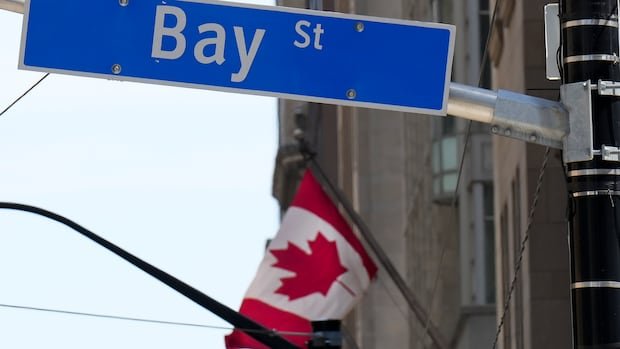

Three major Canadian banks presented cautiously optimistic views on the economy on Thursday, a stark contrast to the concerns expressed by numerous smaller businesses dealing with the impacts of a full-fledged trade war with the United States. Royal Bank of Canada, Toronto-Dominion Bank, and CIBC disclosed their financial results before the Toronto Stock Exchange opened on Thursday. Collectively, these three banking giants hold assets valued at up to $6 trillion on their balance sheets. With extensive portfolios that include mortgages, auto loans, and various debt products for consumers and businesses, along with client networks spanning across Canada and the U.S., these banking powerhouses have a unique perspective to observe the effects of tariffs.
During RBC’s quarterly conference call on Thursday, CEO Dave McKay highlighted the resilience of the Canadian economy, noting improvements in employment and GDP in the second quarter that maintain a cautious optimism for continued growth. He mentioned that despite the ongoing trade discussions between Canada and the U.S., the average effective tariff rate remains low at around six percent, with more than 80 percent of exports remaining duty-free.
TD Bank’s CEO, Raymond Chun, mentioned an emerging “super cycle” for investment in Canada driven by government spending in infrastructure and national defense. According to TD Economics, over $1 trillion in announced projects have been approved by Ottawa and the provinces, extending through 2035 and beyond. Chun expressed confidence in the investment opportunities in Canada, anticipating a historic investment super cycle in the coming decade.
CIBC’s CEO Harry Culham expressed measured confidence in the latter part of 2026. He emphasized that the trade environment is evolving, and the bank is closely monitoring Canada’s labor market for any signs of weakness. A recent study by Oxford Economics for the Canadian American Business Council indicated that eliminating the Canada-U.S.-Mexico Agreement could result in the loss of over 100,000 Canadian jobs.
BMO Capital Markets projected that the latest round of U.S. tariffs could shave approximately half a percentage point off Canadian growth, primarily due to reduced business confidence and investment. Despite the trade challenges, Canada’s major banks remain optimistic, with shares trading near all-time highs on the Toronto Stock Exchange. The BMO Equal Weight Banks Index ETF, comprising Canadian bank stocks, has surged by nearly 50 percent in the past year.