

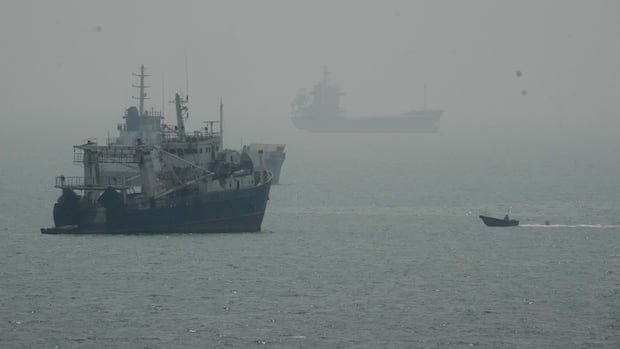

Iran announced on Wednesday that it had carried out attacks on 10 ships near the Strait of Hormuz in response to the sinking of five Iranian oil tankers by the United States. These attacks mark the most significant exchange of assaults on shipping by both nations since the six-month-long conflict began.
The Islamic Revolutionary Guard Corps (IRGC) of Iran retaliated by launching a ballistic missile strike on a U.S. base near Al Azraq in eastern Jordan. Additionally, they targeted two U.S. vessels and eight oil tankers that were trying to traverse a restricted area of the Strait of Hormuz as declared by Iran.
The incidents in and around the crucial water passage led to a spike in oil prices, with the international Brent crude benchmark exceeding $100 per barrel for the first time since July. The ongoing conflict between Saudi Arabia and the Iran-aligned Houthis in Yemen has added further uncertainty to energy markets, with recent Houthi attacks causing significant damage to Saudi oil installations.
As a result of these developments, gas prices have surged in the United States, with a gallon of regular gasoline averaging $4.15 on Tuesday, marking a 26% increase from a year ago. Diesel prices have also risen sharply, standing at $5.90 per gallon, a 59% jump compared to the previous year.
The escalating tensions have raised concerns about the possibility of reaching a lasting resolution before the upcoming U.S. midterm elections. The Bank of America analysts expressed skepticism about the likelihood of a comprehensive agreement being reached in the near future.
In response to the heightened fuel prices, Canada has witnessed a similar upward trend in gas costs, prompting the government to extend the gas tax holiday until the end of January to alleviate the financial burden on consumers.
Iran has revealed plans to establish a restricted maritime zone extending from Chabahar in Iran into parts of the Gulf of Oman and the Arabian Sea. This move follows Iran’s threats against oil tankers in Kuwaiti and Bahraini ports and the targeting of vessels in the region by disabling fire during military activities in the Gulf and Gulf of Oman.
The Strait of Hormuz, a critical global oil transit route, has been severely impacted by the ongoing conflict, leading to disruptions in oil and gas supplies. The situation has prompted the United States to impose a military blockade on Iranian ports while attempting to ensure the safe passage of tankers through the strait.
Despite these efforts, the recent spate of attacks and threats has raised concerns about the stability of the region and the potential for further escalations in the conflict. Iran’s use of advanced weaponry and its targeting of U.S. bases continue to fuel tensions in the region, with both sides engaging in military actions that have significant implications for global energy markets.