

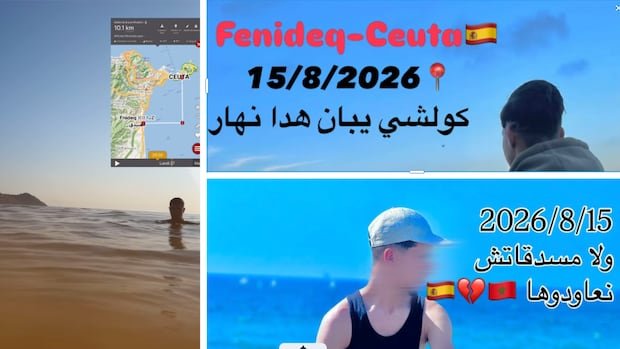

In the lead-up to one of Europe’s largest mass influxes of migrants in recent history, a brief video shared on Instagram attracted 1.4 million views. The video depicted a young man submerged in water up to his neck, with a map outlining a sea route from Fnideq, Morocco, to Ceuta, a Spanish enclave in North Africa. The post’s creator later claimed “we’ve arrived” in response to comments.
This video was just one of many viral posts across platforms like Instagram and TikTok that seemed to have played a role in mobilizing two waves of irregular migration from Morocco to Ceuta. The latest attempt on August 15 resulted in multiple arrests.
These accounts are linked to various online communities focusing on migration-related culture, including music, memes, and visual content. Some of these platforms seem to exploit the aspirations of predominantly African and Middle Eastern youth seeking better opportunities overseas.
Divergent opinions exist among governments and organizations regarding whether a singular entity orchestrated the events in Ceuta or if migration was utilized for geopolitical purposes. Nevertheless, it is evident that misinformation, spread through multiple online channels, influenced the influx towards Ceuta this summer.
CBC’s visual investigations team, in collaboration with Sebastian Vandermeersch of the investigative group Bellingcat, identified numerous social media accounts, particularly on Instagram, that were active before the initial wave on July 30.
The surge in social media posts was initially triggered by false information suggesting that a Spanish court ruling would no longer reject migrants arriving by sea. Faceless accounts then began promoting the notion that the crossing was feasible, using consistent language and visuals. These posts garnered millions of views and culminated in over 72,000 people crossing the border on July 30.
While the majority of those who crossed in July have since returned to Morocco, around 5,000 individuals remain in Ceuta, with some being assisted by charitable organizations. Tragically, nearly 100 people lost their lives attempting the crossing.
The online surge was fueled by a growing number of successful migrant entries into Ceuta even before the Spanish court ruling. Ceuta had become the primary entry point into Spain earlier this year, attracting over 2,200 individuals by land by the end of May, triple the previous year’s figure. The exact reasons for this shift remain unclear but may include stricter surveillance on alternative migration paths.
The surge in social media activity, while significant, does not solely account for the desire to migrate. Many accounts reflect the disillusionment and desperation prevalent among young people in North Africa and beyond, idealizing migration as a solution. This messaging resonates with individuals facing high unemployment and limited opportunities in their home countries.
Accounts originating from North African nations like Morocco and Algeria, as well as reports linking some to Italy and Turkey, highlight the varied sources of these migration-related posts. While some accounts subtly hint at European destinations without explicit promises, others overtly reference potential European cities like Paris and utilize aspirational language about leaving for a better life abroad.
These accounts, often adopting influencer-style content, attract thousands of followers with images and messages romanticizing migration. Despite attempts to reach out to accounts associated with the July 30 and August 15 waves, there was no response received.
The heightened online activity underscores the complex intersection of social media, misinformation, and real-world migration dynamics, shaping the experiences of individuals seeking new opportunities in Europe.