

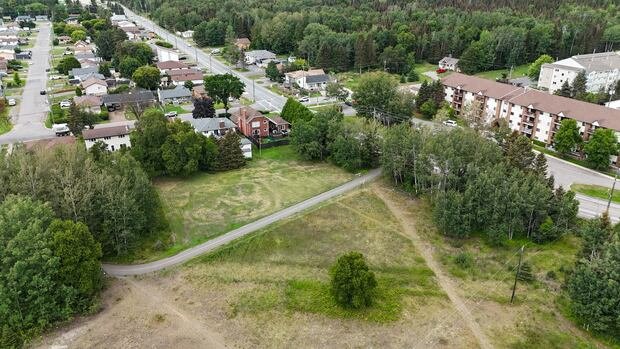

Lori Santink expressed her disappointment but lack of surprise regarding the city council’s recent decision to rezone two vacant properties for new housing developments in Thunder Bay, Ontario. The properties, including 791 Arundel St., were sold as surplus land to Terralux General Contractors and Development Limited to address the city’s shortage of about 1,000 housing units.
The approved rezoning allows for the construction of over 900 new units across the city, with specific plans for 360 units in two apartment buildings at 791 Arundel St., 150 units in one apartment building at 144 Fanshaw St., and 400 units in two apartment buildings at 300 Tokio St. While the Arundel and Fanshaw street proposals required rezoning, the Tokio Street property was already zoned appropriately.
Critics, including Santink from TBay Greenspace Preservation, raised concerns about the developments conflicting with the city’s Net-Zero Strategy and Climate Adaptation Strategy. The grassroots group collected over 2,600 signatures in a petition opposing the development and held a rally at city hall, attracting more than 100 participants.
Under the Ontario government’s Bill 60, residents can no longer appeal municipal council decisions through the Ontario Land Tribunal, limiting avenues for challenging zoning decisions. Santink expressed the need for legal support for a potential judicial review.
Devon McCloskey, Thunder Bay’s planning services manager, mentioned that the developer must submit applications for site plan control and building permits before construction can commence. The projects have undergone preliminary studies on traffic, transportation infrastructure, and environmental considerations, with public input being a key component.
Coun. Andrew Foulds, representing the Current River ward, opposed the rezoning of the Arundel St. property but acknowledged the significant public engagement on the matter. Leia Minaker, an expert on housing issues, highlighted the challenges of reaching consensus on development projects amid competing opinions.
In northern Ontario, where housing affordability historically prevailed, communities are preparing for population growth driven by mining projects and economic activities. Santink emphasized the importance of transparent communication from the city throughout the development process to keep the public informed.