

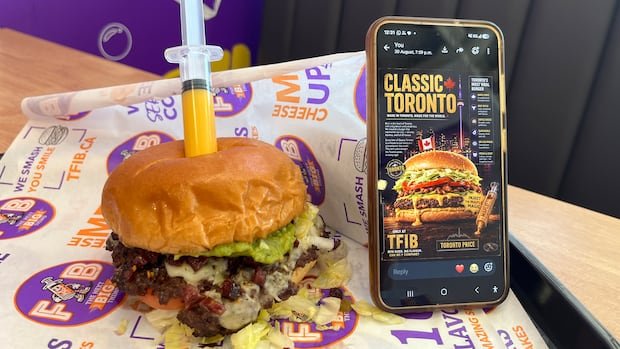

From playful-looking sandwiches to shrimp shaped like doughnuts, artificial intelligence (AI) imagery is making an appearance in various fast-food establishments.
Customers have been taking to social media platforms to post pictures of signs and displays showcasing food items that appear unrealistic and artificial, suggesting they may have been created using AI tools, which have become more accessible for generating visuals inexpensively.
“This seems like the kind of food extraterrestrials would include in a presentation about Earth cuisine,” a Reddit user remarked, sharing an image of a sign featuring breaded shrimp and gyro sandwiches with oddly geometric textures.
Other observers described a sandwich at the CNE fair that they suspected was AI-generated as “strange and unsettling” and “sloppy.”
For some patrons in Toronto, these images not only deter their appetite but also serve as a reflection of the restaurant’s integrity.
“I find it very unauthentic, and it doesn’t encourage me to dine at your establishment,” expressed Cynthia Lem.
For Lem, AI-generated visuals raise doubts about the actual appearance of the food when served, making her cautious of eateries utilizing such technology.
While some consumers express displeasure with these images affecting their appetite and raising concerns about potential misrepresentation of menu items, individuals in the restaurant industry argue that AI imagery has helped them cut costs in a challenging business environment. Marketing experts believe that the strategic use of this technology can be beneficial.
Distinguishing AI Applications
Prior to ordering, diners heavily rely on visuals to guide their choices, notes business consultant and marketing professor at Schulich School of Business, David Pullara. This reliance on AI-generated images poses a significant risk for businesses.
“Effective food photography drives sales,” stated Pullara. “Therefore, if AI produces a subpar image, it could harm sales and brand reputation.”
Although some consumers may oppose AI usage on principle, Pullara believes that employing AI to enhance food photography is relatively low-risk when done effectively, particularly for aiding small to medium-sized enterprises in cost management.
Restaurants face narrow profit margins, making it challenging to stay financially viable. According to a recent survey by Restaurants Canada, 41% of members reported operating at a loss or breaking even, with escalating fuel costs exacerbating the situation.