


On Monday, the prominent AI firm Anthropic submitted documents for what could turn out to be the largest initial public offering (IPO) in history, despite its CEO cautioning that advanced AI technologies might represent a potential existential risk to humanity.
This filing positions the San Francisco-based company for a potential market launch next month, which could surpass the record-setting IPO of SpaceX in June, which generated an unprecedented $86 billion US. An IPO from Anthropic would also allow it to outpace OpenAI in the race to go public, marking what is anticipated to be a pair of significant stock market entries from these competing AI organizations.
Sinan Aral, a professor specializing in management, information technology, and marketing at MIT’s Sloan School of Management, remarked to CBC News on Monday, “It would instantly become one of the most valuable companies on the planet.”
He added, “Anthropic has effectively built a robust model swiftly and has also entered the enterprise space, demonstrating value efficiently.”
The filing follows an essay by CEO Dario Amodei in which he advocated for a slowdown in the development of cutting-edge AI models.
Earnest Wong, a portfolio manager and head of research at Toronto’s Baskin Wealth Management, expressed surprise that this caution was minimally reflected in Anthropic’s latest prospectus.
Wong told CBC News, “Most of the risks mentioned are typical legal disclaimers found in many companies’ filings.”
An IPO could furnish Anthropic with substantial capital to fuel its growth. Although the exact amount to be raised remains uncertain, along with its ultimate valuation and share price, even conservative estimates would elevate the five-year-old startup to one of the world’s premier companies and potentially enrich both Amodei and his co-founder sister, Daniela, by billions.
Mark Daley, chief AI officer at Western University in London, Ontario, commented to CBC News, “It’s really hard to determine a value.”
He noted, “At present, investors are appraising hundreds of billions of dollars. This may be accurate, but it’s also plausible that a technology revolutionizing our economy could still be overvalued. We’ll have more clarity in a couple of years.”
The 335-page filing revealed that while Anthropic’s revenues are increasing rapidly, it has yet to achieve profitability, similar to many technology companies entering the public market. The firm behind the Claude chatbot recorded a net loss of $80.7 billion US in the first half of 2026, a significant increase from a loss of $13 billion during the same timeframe a year prior.
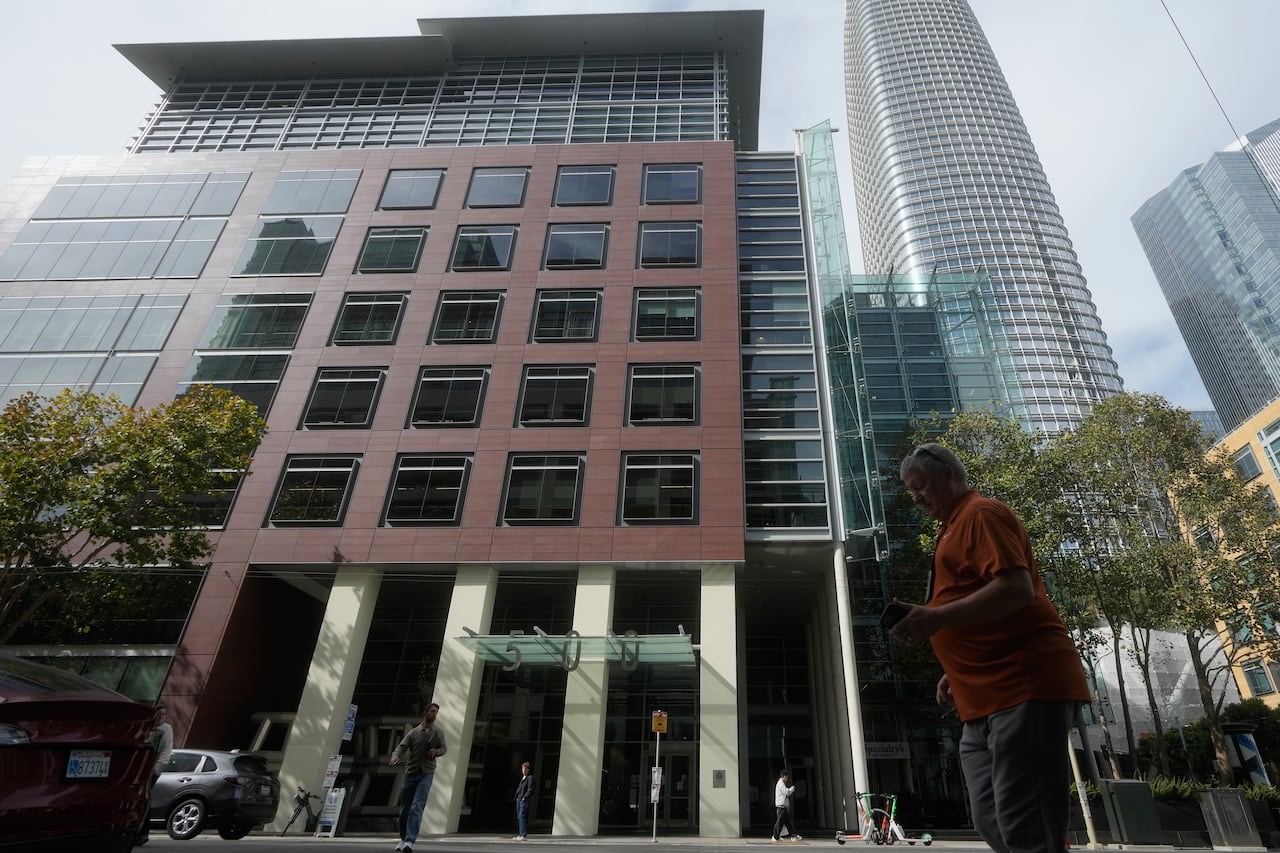
A view of 500 Howard Street in San Francisco, which is the address of Anthropic headquarters. (Jeff Chiu/The Associated Press)
Despite the financial setbacks, Anthropic was valued at $965 billion US by private investors earlier this year, and it is now anticipated to see that valuation reach $1.5 trillion US or even $2 trillion US, though a final valuation is yet to be confirmed. At a $1.5 trillion US valuation, Anthropic would be among the most valuable publicly traded companies globally, in line with Tesla.
Wong stated, “Discussion can occur regarding whether $1.5 trillion US or $2 trillion US is accurate, but it’s evident that this is a large company that cannot be ignored.”
Reports suggest that the IPO could raise up to $100 billion US, surpassing the previous record held by SpaceX.
In its regulatory documents, Anthropic indicated that it intends to list its shares on the Nasdaq Global Select Market under the ticker “ANT.”
-
What happens when a Google data centre comes to town? Southern India is finding out
-
AI ‘slop’ is dominating menus, as some restaurant owners turn to it to save time and money
Risks aplenty, but big payoff to founders
The company noted in its filing that part of the funds raised could be allocated towards acquiring other firms and technologies, along with investing in infrastructure necessary for competing with its rivals.
Founded in 2021 by former leaders of OpenAI, Anthropic is engaged in a competitive struggle for market leadership with that organization; the two CEOs, Amodei and OpenAI’s Sam Altman, are recognized as formidable competitors.
Additionally, they face numerous challengers, including Google, emerging startups in the U.S. and China, and Musk’s SpaceX, which has its own AI division. Anthropic, OpenAI, and SpaceX’s AI sectors are all incurring losses that exceed their revenues due to the high costs associated with AI development, raising concerns of a potential bubble.

The IPO would assist in addressing any cash flow deficiencies while also providing significant wealth to the seven founders of Anthropic, including Amodei and his sister. Collectively, they possess nearly 500 million shares, though the offering document does not clarify how much this will represent post-IPO.
According to Forbes, Dario, aged 43, and 39-year-old Daniela, who serves as the president of Anthropic, are each estimated to be worth $15.5 billion US, placing them as the 176th and 177th richest individuals globally.
The filing outlined several risks facing Anthropic, including challenges in retaining key personnel, navigating regulatory hurdles, and securing sufficient computational resources to operate its AI systems.
However, a notable concern mentioned is that its AI technologies could “pose catastrophic or existential risks to humanity.”
Calls for an AI slowdown
The planned IPO comes amid growing anxieties about AI, both within the sector and among the general public, with reports surfacing regarding increasingly powerful systems that can tackle issues beyond human capability but might also deviate and perform harmful actions.
In September, Amodei urged the AI industry to decelerate its rapid advancements to allow safety protocols to catch up. He cautioned that without such a slowdown, AI could potentially unleash a swarm of agents capable of taking over the internet within a span of six to twelve months.
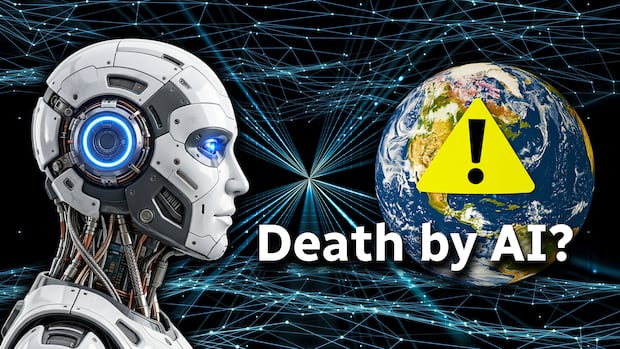
Anthropic researcher Jacob Coxon resigned over concerns that artificial intelligence could cause human extinction within the next decade — and a slew of warnings have followed. Andrew Chang explains the spectrum of potential dangers posed by the ‘intelligence explosion’ worrying AI industry employees and experts.
(Photo credits: The Canadian Press, Reuters, Adobe Stock and Getty Images)
He proposed a strategy on his website to enhance oversight within the industry, indicating that Anthropic is already taking steps in this direction. However, he mentioned that broader coordination among industry players and governments worldwide, including authoritarian regimes, would be essential for additional measures.
Amodei wrote, “I believe that if slowing down bought us even an extra year or two before models reach critical levels of capability, and we used that time to advance alignment, we could greatly reduce the risk that something goes seriously wrong.”
Clashes with the U.S. government
Anthropic has positioned itself as a “good actor” in the AI space, emphasizing safety and responsible growth rather than prioritizing rapid expansion without regulations.
This approach has been partly informed by the company’s conflict with the U.S. government, which began in February when President Donald Trump and Secretary of War Pete Hegseth accused Anthropic of threatening national security and labeled it a supply chain risk.
-
AI company Anthropic amends core safety principle amid growing competition in sector
-
Analysis
Trump claims AI poses no real risk — but even some of his allies disagree
-
Trump decries critics of AI, saying they’re ‘negative forces’ with exaggerated concerns
In March, Anthropic initiated legal action against the Pentagon, alleging an “illegal campaign of retaliation” for its refusal to allow unrestricted military applications of its technology. This legal dispute has escalated the already-public debate regarding the use of AI in warfare and mass surveillance.
OpenAI, the creator of ChatGPT, secured a deal with the Pentagon just hours after Anthropic faced government backlash for its position. Anthropic also filed a narrower lawsuit concerning a different Pentagon regulation aiming to designate the company as a supply chain risk.
A judge in California ruled in favor of Anthropic in the first case, while a judge in Washington, D.C., sided with the government in the second. Both parties are appealing the respective rulings.