

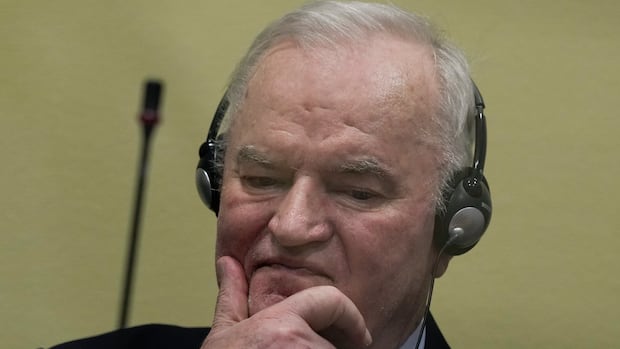

Ratko Mladic, who was found guilty of genocide for masterminding the 1995 slaughter of over 8,000 Muslims in what is recognized as Europe’s most horrific event since World War II, has passed away.
According to his attorney Dragan Ivetic, Mladic died in UN custody on Thursday, although the cause of death was not disclosed. Ivetic noted that the former general had spent his final months in the hospital section of the UN detention facility located in a suburb of The Hague.
The massacre in Srebrenica marked a brutal climax of a conflict that extended over three years, during which Mladic relentlessly bombarded the besieged capital Sarajevo with artillery, tanks, mortars, and heavy gunfire from his nationalist Serb forces, resulting in 10,000 fatalities.
Over a span of four days in July 1995, the bodies from Srebrenica were bulldozed into mass graves, some subsequently exhumed and relocated to remote mountain sites in an effort to conceal the evidence of the atrocities.
The United Nations International Criminal Tribunal for the former Yugoslavia (ICTY) determined that the objective was “ethnic cleansing” — the forced removal of Bosnian Muslims, Croats, and other non-Serbs to clear the territory for a Greater Serbia.
The tribunal concluded that Mladic, along with Serbian President Slobodan Milosevic and Bosnian Serb political leader Radovan Karadzic, was involved in a criminal conspiracy to execute this plan.
“I do not recognize this court,” Mladic, known as the “Butcher of Bosnia” by his adversaries, declared during an ICTY hearing regarding his case in 2014. Upon receiving a life sentence in 2017, he shouted that it was “all lies.”
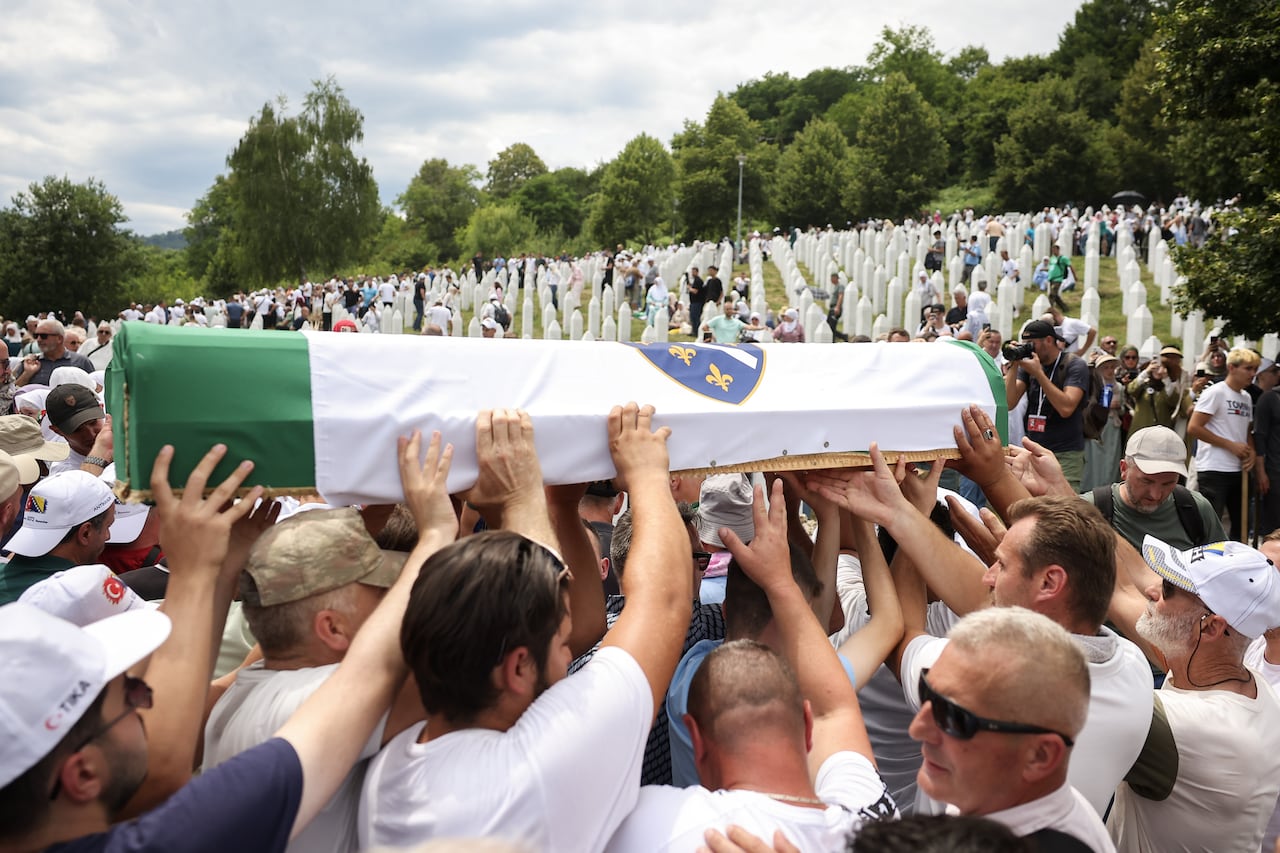
Bosnian Muslims carry coffins containing remains of 10 newly identified victims of the Srebrenica massacre, during a mass burial ceremony in Potocari, Bosnia on July 11. (Armin Durgut/The Associated Press)
Karadzic, who was also convicted of genocide in 2016, and Mladic dominated the ICTY’s wanted list for years after the conclusion of the war. However, Mladic lived in relative security in Belgrade until Milosevic was ousted by a popular revolt in 2000.
Milosevic passed away in custody on March 11, 2006, just a few months prior to the verdict in his four-year trial concerning genocide and other war crimes committed in Croatia, Bosnia, and Kosovo.
Defiant towards peacekeepers
The army Mladic led in Bosnia exemplified brutality. In some of the most grotesque instances, prisoners asphyxiated in the heat after being forced to consume salt while denied water; were starved and sexually assaulted in detention camps; were ordered to jump off a bridge and shot; and were executed by the hundreds at night after being expelled from detention with chemical gas.
“For me, Mladic symbolizes all the terrible crimes that occurred during the war — our girls were raped, and boys killed, simply because they were Muslim,” stated Munira Subasic, whose son and husband were murdered by Bosnian Serb forces after they seized Srebrenica.
Mladic had a cameraman document the assault on the besieged enclave of Srebrenica, berating Dutch UN peacekeepers who mistakenly believed his assurances that the residents would be safe under his control. Srebrenica was designated as a “safe area,” intended to shield civilians from ethnic cleansing.
“We gift this town to the Serb people,” Mladic stated on camera, claiming the victory as retribution against Muslim Turks, who previously controlled the area during the Ottoman Empire.
When NATO attempted in 1995 to curb his forces with the threat of limited airstrikes, his troops brazenly captured UN peacekeepers as human shields, binding them to likely targets.
In November 1996, Mladic and his top generals capitulated to intense Western pressure, agreeing to his removal as mandated by Bosnian Serb President Biljana Plavsic, who succeeded Karadzic and was later imprisoned for her involvement in war crimes.
Mladic’s son reported that he was born in 1943, although official records indicated a birth year of 1942.
He served as an officer in the former communist Yugoslav People’s Army (JNA) at the onset of Yugoslavia’s disintegration in 1991.
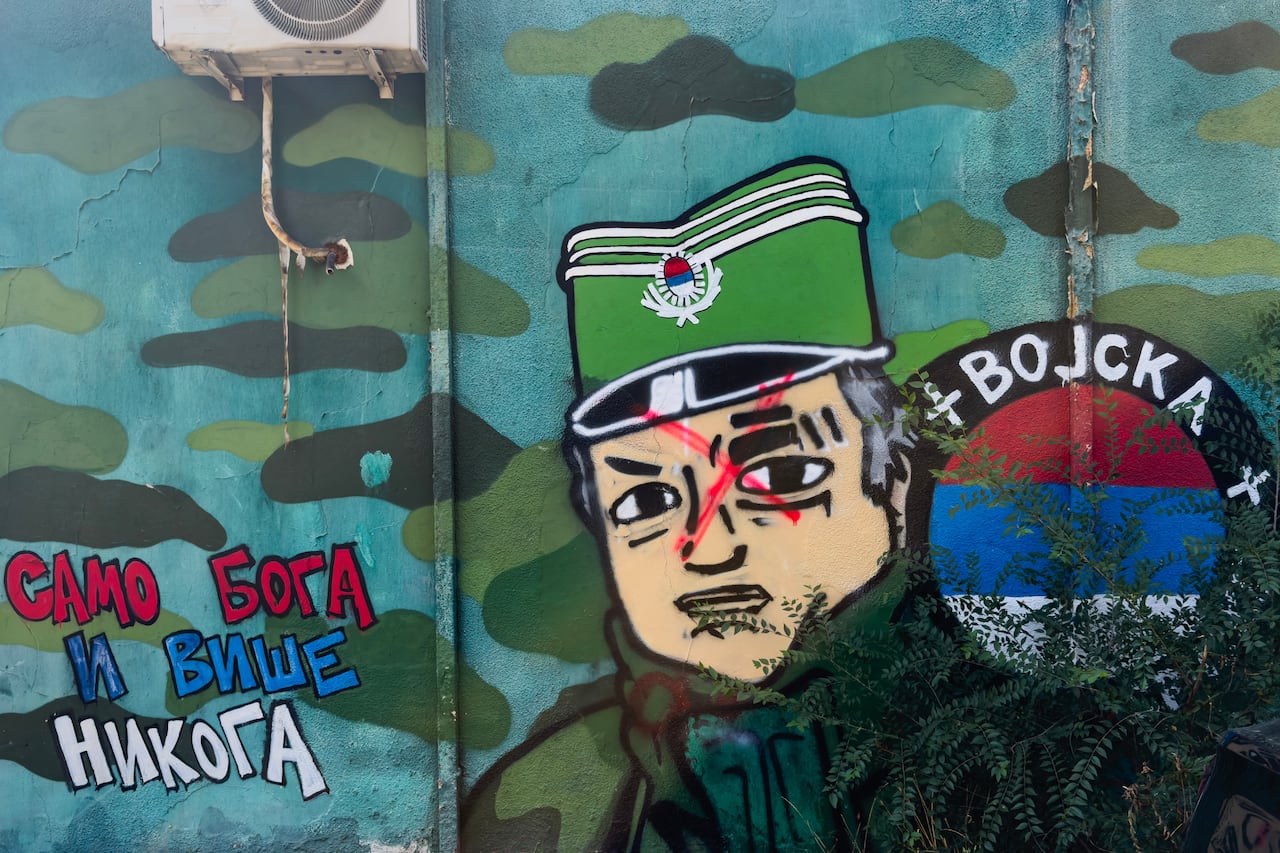
A defaced mural depicting Mladic is shown in Belgrade on Thursday, with a Cyrillic inscription reading, ‘Only God and no one else.’ (Andrej Isakovic/AFP/Getty Images)
When Bosnian Serbs revolted in 1992 against Bosnia’s Muslim-led secession, Mladic was appointed to lead the newly formed Bosnian Serb army that rapidly captured 70 percent of the landlocked nation.
Numerous towns were besieged with heavy weaponry once belonging to the JNA, while villages were torched as 22,000 troops from the UN Protection Force remained largely impotent, constrained by orders not to take sides.
A combination of Western pressure, covert American support in terms of arms and training for Croats and Muslims gradually shifted the balance against Mladic’s forces. Decisive NATO strikes completed the effort.
Despite appeals from the West, the reformist government in Serbia following Milosevic’s downfall did not dare to confront a figure who was regarded as a hero by a segment of nationalist Serbs.
When he was finally apprehended in 2011, he offered no resistance. His right arm was paralyzed, likely due to an untreated stroke. He appeared drastically different from the robust general of the mid-’90s.
He experienced a heart attack in 2013 and seemed older than his actual age. By his own account, he felt like a frail elderly man.
His appeal against his conviction was dismissed in 2021, along with multiple requests for his release on compassionate grounds, including recent appeals.