

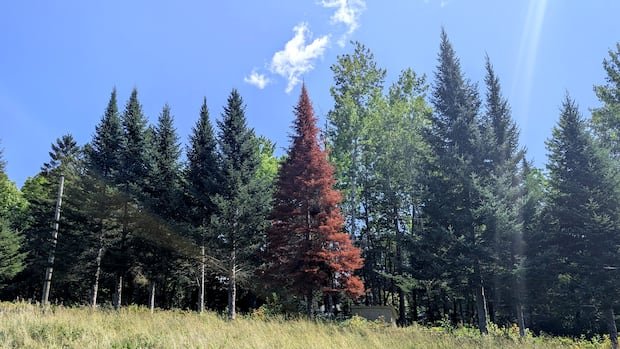

Balsam fir trees in New Brunswick are showing signs of distress following last year’s severe drought, leading to concerns about the fate of the iconic provincial tree. According to Professor Anthony Taylor, a forestry researcher at the University of New Brunswick, reports from woodlot owners and personal observations indicate that these evergreen trees, often sought after for Christmas decorations, are gradually turning red, drying out, and perishing.
Taylor, who has been investigating the impacts of climate change on New Brunswick’s forests for a considerable period, noted that the current scenario mirrors previous occurrences after exceptionally hot and dry summers, such as those in 1986 and 2018. He emphasized that the warm, dry conditions during droughts negatively affect the growth capacity of balsam fir trees.
The expert explained that the trees halt their photosynthesis process prematurely in response to drought stress, hindering their growth and essential metabolic functions. This vulnerability, compounded by existing stressors like pests or diseases, heightens the likelihood of tree mortality as they lack the necessary reserves to sustain themselves.
One significant challenge faced by balsam firs is their shallow root system, which makes it difficult for them to access sufficient water during prolonged dry spells. Peter McKeil, a woodlot owner in Burtt’s Corner, has observed substantial damage to his fir trees since June, with the lower branches turning red and new affected areas emerging continuously. Despite salvaging some of the deceased trees for lumber, he has modified his harvesting practices to maximize the value of the remaining fir stock.
McKeil expressed a grim outlook on the future of balsam firs in southern New Brunswick, attributing the species’ struggles to the worsening impacts of climate change. He stressed the urgent need for climate action, highlighting the visible impact as a call to address issues such as reducing reliance on fossil fuels and preserving forests.
Professor Taylor underscored the importance of his research in highlighting the consequences of climate change, urging society to accelerate efforts in mitigating its effects to prevent further ecological disruptions.