

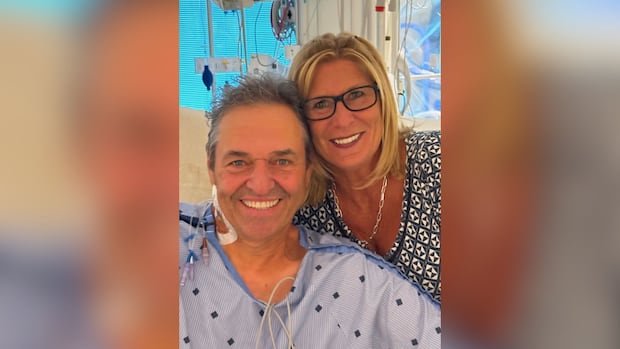

A man from Quebec, aged 64, has made history in North America by being the first recipient of a regenerated liver, utilizing innovative technology that could potentially increase the availability of transplantable livers by dozens within a year. Gérard Landry, a resident of Nouvelle in Quebec’s Gaspé Peninsula, battled liver issues for about 15 years, leading to cirrhosis and liver cancer. Prior to his liver transplant surgery, his doctor shared with him the remarkable news that the liver had been regenerated using a novel machine at Montreal’s Centre hospitalier de l’Université de Montréal (CHUM).
The groundbreaking technology, known as Liver Assist, enables medical professionals to treat and evaluate a donated liver outside the body before transplantation. For Landry, this meant receiving a liver that might have otherwise been deemed too risky for use. Dr. David Hénault, a hepatopancreatobiliary surgeon and liver transplant expert at CHUM, spearheaded the project and conducted Landry’s surgery. The Liver Assist system functions by connecting a donated liver to a machine that circulates oxygen-rich fluid through the organ, potentially reversing damage caused by oxygen deprivation during the organ’s extracorporeal period.
This technology allows doctors to transition to a blood-based solution to assess how the liver performs under conditions mimicking the human body. Hénault explained that the liver Landry received was particularly suitable for this technology due to its vulnerability to oxygen deprivation-induced damage during the transfer process. The CHUM, which performs approximately 70 liver transplants annually, collaborated with Transplant Québec to evaluate previously declined livers for transplantation potential with the new technology. The team anticipates that the machine could make an additional 20 to 24 livers available for transplantation in its initial year of implementation, with potential for further expansion as the technology gains wider acceptance.
Studies indicate that this technology can help reduce complications, reoperations, and hospital stays for suitable patients. Landry’s post-transplant progress exhibited promising signs immediately, with improved blood work results following the operation. His recovery progress has been notably positive, exceeding typical expectations for a liver transplant recipient. Landry is currently recuperating in Montreal, undergoing regular blood tests for medication adjustment. Once fully recovered, he plans to return to Gaspésie in eastern Quebec to continue his healing journey, eager to reunite with his family, friends, and horses.
Furthermore, Landry hopes that his experience will inspire discussions about organ donation, emphasizing the importance of donor availability alongside advanced medical technologies. As he aptly put it, “if you have a horse without a rider, you don’t have a ride.”