

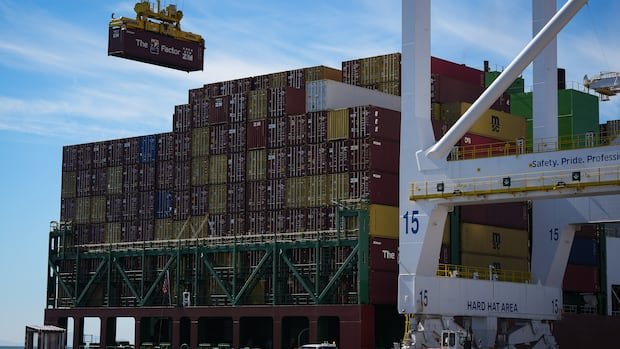

With the clock ticking for Canada to finalize a trade agreement with the United States, numerous Canadian businesses are anxious, anticipating potential significant losses in sales if new tariffs are imposed. The impending U.S. tariffs, scheduled to come into effect on Wednesday, would impact a wide range of Canadian products, such as electronics, dairy, alcohol, and wood, adding to existing trade sanctions.
Negotiations are intensifying, with Canadian officials possibly meeting U.S. Trade Representative Jamieson Greer before Prime Minister Mark Carney and U.S. President Donald Trump discuss the situation prior to the tariff deadline. The final decision rests with President Trump, emphasizing his pivotal role in any potential deal.
For many Canadian businesses, the proposed tariffs pose a severe threat, not only by raising prices for American customers but also by rendering cross-border shipping economically unviable. Todd Stafford, president of Northern Cables in Brockville, Ontario, expressed concerns as half of their sales rely on U.S. buyers. The company, which produces copper and aluminum power cables, fears losing all U.S. business if the tariffs go into effect.
While the bulk of cross-border trade is shielded under the Canada-U.S.-Mexico Agreement (CUSMA), the new tariffs would impact approximately five percent of overall Canadian-U.S. trade, affecting items like hockey sticks, certain flowers, and antiques. Sectors such as energy, potash, and critical minerals are expected to remain exempt.
The looming threat of tariffs has already taken a toll on businesses, with some experiencing adverse effects even before the implementation. Randy Williams from Monterey Textiles highlighted the distress faced by textile manufacturers due to uncertainties surrounding tariffs, leading to layoffs and diminished orders.
As businesses brace for potential impacts, there is a growing sense of uncertainty and apprehension among Canadian entrepreneurs. The imminent tariffs could disrupt established trade relationships and economic stability, prompting businesses to explore alternative strategies to mitigate potential losses.