

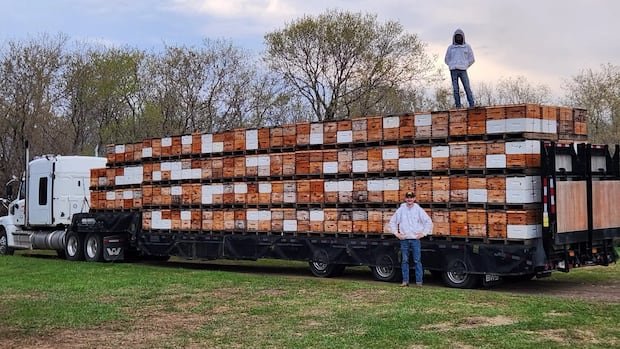

Osee Podolsky, the general manager of Podolski Honey Farms in Ethelbert, Manitoba, expressed concern over the impact of recent developments on their business. The farm, established by his grandfather more than seventy years ago, primarily ships its honey to customers in the United States. However, the imposition of 50% tariffs on $28 billion worth of Canadian goods by the U.S. has put the future of the family-run business at risk of bankruptcy.
Podolsky emphasized that approximately 90% of the honey produced by the Ethelbert company is sold to U.S. buyers. With the new tariffs in place, it has become financially unfeasible for them to continue supplying their regular American customers, leading to a significant loss of business. He highlighted the challenges faced by small businesses like theirs, stating that shifting focus to the Canadian market might not be a sustainable solution due to increased competition among local beekeepers.
The tariffs were implemented after failed trade negotiations between Canadian and American officials, with Prime Minister Mark Carney citing unreasonable demands from the U.S. side as the reason for Canada walking away from the talks. The proposed terms, including concerns over French language protections and trade restrictions, were deemed detrimental to Canada’s interests and sovereignty.
In response to the U.S. actions, Canada plans to retaliate with equivalent tariffs set to take effect after Labour Day. This move aims to protect Canadian industries and assert the country’s economic autonomy in the face of unfair trade practices. Small businesses like Podolski Honey Farms are bracing for the financial impact of these tariffs, which threaten their viability and profitability in the coming months.
Loren Remillard, the president and CEO of the Winnipeg Chamber of Commerce, expressed disappointment over the tariff escalation and echoed support for Canada’s decision to prioritize its national interests in trade negotiations. He emphasized the importance of standing firm and securing a fair deal that benefits Canadian businesses and consumers alike.
The repercussions of the tariffs extend beyond the honey industry, affecting other sectors like steel production in cities such as Selkirk. Local leaders, including Selkirk Mayor Larry Johannson, underscored the need for interprovincial cooperation and diversifying trade partnerships to mitigate the impact of unpredictable trade relations with the U.S. Johannson emphasized the importance of supporting Canadian businesses and fostering a resilient economy amidst ongoing trade uncertainties.
While the situation remains challenging for businesses on both sides of the border, Podolsky emphasized the mutual benefits of Canada-U.S. trade for beekeepers and suppliers. He called for a swift resolution to the tariff dispute, hoping for a return to normal trade relations sooner rather than later to safeguard the livelihoods of those dependent on cross-border commerce.