

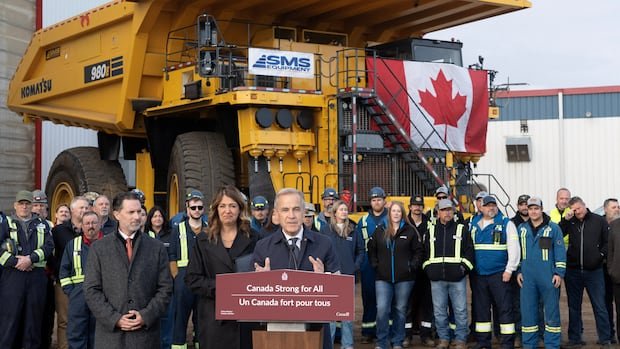

The federal and Alberta governments have jointly declared a proposal for a pipeline to transport one million barrels of oil daily from Alberta to the B.C. coast as the first project of national interest. This pipeline, officially named the Pacific Link pipeline, has been added to Schedule 1 of the Building Canada Act. This move signifies a shift from debating the necessity of the project to expediting and streamlining the approval process, including environmental evaluations.
In the past, project proponents faced uncertain timelines and costs before receiving federal support, hindering progress. By setting clear positions early in the process, the government aims to eliminate these barriers and reignite construction activity.
It is anticipated that the pipeline will significantly boost Canada’s GDP, with up to $30 billion annually, $20 billion of which will be directly linked to the pipeline. By diversifying export destinations beyond the U.S., Canada expects to command higher oil prices, potentially increasing annual revenues by an additional $10 billion. Moreover, upon approval, the project is projected to create around 140,000 job opportunities.
Minister Dominic LeBlanc is tasked with finalizing the project requirements document by September 1, 2027, paving the way for construction to commence, aiming to have the pipeline operational by 2032-33. The development of these conditions will involve collaboration with the Major Projects Office and the Canada Energy Regulator, engaging stakeholders to establish environmental safeguards, regulatory oversight, Indigenous involvement, and local employment.
The estimated cost of the Pacific Link pipeline ranges between $35.2 billion and $43.7 billion, including a contingency fund. Ownership of the pipeline will be shared, with the Alberta government and federally owned Trans Mountain Corporation each holding a 45% stake, and the Pembina Pipeline Corporation owning a 10% stake during construction. Post-completion, Pembina Pipeline Corporation will have the option to acquire an additional 10% stake, offering Indigenous communities a minimum 10% ownership share in the project.
While the majority ownership (90%) lies with the government entities, private investors are showing interest in participating, contingent on the project’s swift approval and construction timeline. Alberta Premier Danielle Smith views government involvement as a catalyst for attracting private investment in future ventures, enhancing industry confidence.
By selecting a southern route over a northern British Columbia trajectory, the project aims to avoid ecologically sensitive areas like the Great Bear Sea. Additionally, the federal government has committed to reducing methane emissions with Alberta to enhance Canada’s positioning in the global energy market favoring low-carbon products.
The announcement has received mixed reactions, with business groups applauding the initiative for bolstering regulatory support, while environmental organizations criticize the increase in oil production and associated emissions. The Canadian government emphasizes a comprehensive environmental approach, including the Pathways Project for carbon capture and storage, as part of its broader climate mitigation strategy.
Political leaders have expressed contrasting views, with NDP Leader Avi Lewis raising concerns about environmental impacts and Conservative Leader Pierre Poilievre advocating for expedited project implementation. Moving forward, public-private partnerships and environmental considerations will be pivotal in shaping the success and sustainability of the Pacific Link pipeline.