

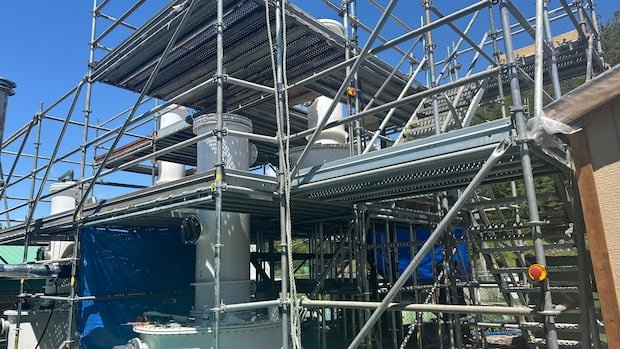

A startup in Nova Scotia is conducting trials on a technique to capture and retain more carbon in the ocean through a new experimental facility to validate the idea. The ocean currently acts as a primary reservoir for surplus carbon dioxide, having absorbed approximately 30% of all human-induced carbon emissions since the 1980s. pHathom, the company behind the initiative, aims to further reduce emissions from the atmosphere by capturing carbon dioxide and transforming it into a form suitable for secure storage in the ocean for thousands of years.
This innovative approach will be tested at the Huntsman Marine Science Centre in St. Andrews, N.B., as co-founder and CEO Kimberly Gilbert emphasized the importance of proving the safety and effectiveness of their method at a local level. The process adopted by pHathom mimics a natural occurrence where raindrops absorb carbon dioxide from the air, becoming slightly acidic. When these raindrops interact with alkaline rocks like limestone, a fraction of the rock dissolves, converting the carbon dioxide into bicarbonate. Ultimately, this bicarbonate reaches the ocean, where it can be stored for extended periods, effectively keeping carbon dioxide out of the atmosphere.
pHathom’s procedure entails exposing seawater to the emissions of a biomass power plant in a reactor to make the water more acidic. Subsequently, the acidic water is combined with small limestone particles in a tank to convert the carbon dioxide into bicarbonate before being reintroduced into the ocean with a pH level similar to regular seawater. Other companies in Nova Scotia are also exploring variants of carbon removal techniques, known as alkalinity enhancement, to reduce carbon dioxide levels in the environment.
The pilot phase by pHathom aims to capture 0.1 tonnes of carbon dioxide daily, highlighting the potential impact compared to larger carbon-emitting sources like the Belledune coal-fired power plant. The treated water generated during the process will be used for testing tanks to evaluate its effects on various marine species over a three-month period. Looking ahead, if successful, pHathom plans to expand its operations with another testing location in Nova Scotia next year, integrating their reactor into a building transitioning from a fossil-fuel boiler to a biomass system.
Despite the promise of this technology, challenges such as energy consumption and scalability remain significant obstacles. Researchers and experts emphasize the necessity of transitioning away from fossil fuels while exploring innovative carbon removal technologies to combat the climate crisis effectively. Canada has been recognized for its advancements in ocean alkalinity enhancement research, with calls for international collaboration and regulatory frameworks to support these initiatives. Although recent policy changes have introduced uncertainties in the market, companies like pHathom remain optimistic about the future impact of their environmental solutions and readiness for global implementation.