

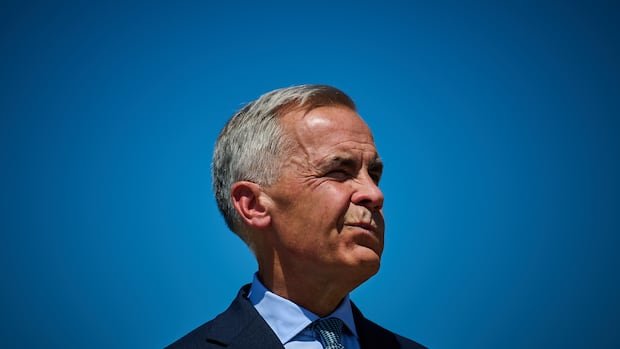

Prime Minister Mark Carney described the ongoing negotiations with the United States to avert impending tariffs as delicate and intense. Carney affirmed his intention to engage with his American counterpart within the next 48 hours to reach a mutually satisfactory agreement. In a statement to journalists in St. John’s, where he unveiled a significant hydroelectric pact with Quebec and Newfoundland and Labrador, Carney refrained from disclosing details of the discussions publicly, emphasizing the critical nature of the talks.
When questioned about potential retaliatory measures if an agreement is not reached, Carney asserted his preparedness for any scenario. The Prime Minister had a phone conversation with President Donald Trump on Monday afternoon regarding the trade negotiations, as confirmed by Audrey Champoux, a spokesperson for Carney, who did not elaborate on the specifics of the call.
Canada’s Trade Minister Dominic LeBlanc and chief trade negotiator Janice Charette have been engaging in discussions with U.S. Trade Representative Jamieson Greer over the past few weeks to avert the proposed Section 338 tariffs and reduce the existing Section 232 tariffs on industrial goods. Following an extensive meeting on Monday afternoon with Greer and U.S. Commerce Secretary Howard Lutnick, it was uncertain if this marked the final ministerial-level discussion.
Although a subsequent meeting with Greer is not currently scheduled, sources suggest that further engagements may occur before Carney and Trump convene prior to the tariff deadline on Wednesday. The American negotiating team is anticipated to confer with Trump after the meeting with Canadian officials, as indicated by sources familiar with the discussions.
The negotiations center on the concessions each party is willing to make. While the U.S. is seeking the reintroduction of American liquor in Canadian stores and the removal of retaliatory tariffs on U.S. autos, Canada is pressing for the elimination of the threatened Section 338 tariffs and substantial tariff relief for sectors impacted by existing levies. Greer has reiterated the U.S.’s reluctance to completely abandon its tariff regime.
Despite the challenges, Erin O’Toole, a member of the Prime Minister’s Canada-U.S. advisory committee, acknowledged progress in discussions with the U.S. O’Toole emphasized the need for a fair deal that benefits Canadian workers and the economy, expressing concerns about the potential negative impact of escalating tariffs on both countries. Planning for possible retaliatory measures in response to U.S. tariffs is underway in Canada, should negotiations fail to yield a favorable outcome.
The hope remains to avoid a cycle of retaliatory actions that could harm economies and workers on both sides.