

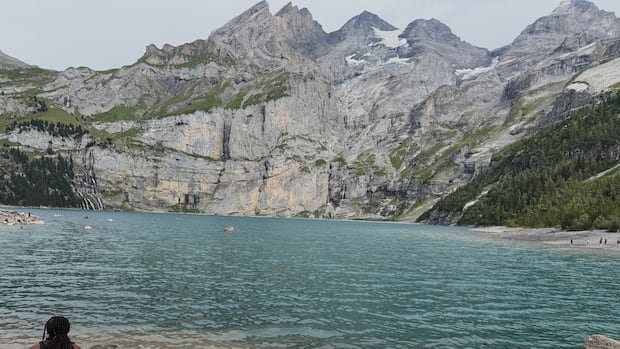

Glaciers in Switzerland, known for hosting the most glaciers in the Alps, have experienced a 5.5% decrease in ice volume this year, marking the second-largest drop on record. This decline is attributed to heat waves and reduced snowfall during winter, as highlighted by experts. According to the GLAMOS Swiss glacier monitoring service and the Swiss Academy of Sciences, the long-term survival of Alpine glaciers is increasingly unlikely under these conditions.
Over the past five years, Switzerland has witnessed a significant decline in ice volume, amounting to nearly a fifth of the total volume. This trend underscores growing concerns about the impact of global warming on Europe, which is currently the fastest-warming continent. Matthias Huss, the head of GLAMOS, emphasized that the current warming can be directly linked to human-induced climate change and emissions from fossil fuels.
The critical role of winter snowfall in glacier preservation was emphasized by Huss, noting its dual function in preventing ice melt and providing crucial nourishment for glaciers. The scarcity of snow cover exacerbates the vulnerability of glaciers to melting and reduces the potential for ice formation at higher elevations.
Noteworthy global warming-induced disasters, such as the destabilization of a Himalayan slope leading to catastrophic flooding in Nepal, alongside substantial glacier shrinkage in Greenland and Antarctica, further highlight the far-reaching impacts of accelerated ice melt. In Switzerland, the loss of 2.2 trillion liters of ice from July to September alone is equivalent to four times the country’s annual water consumption, significantly affecting its hydropower generation and water supply to important European rivers.
The decline in glacier thickness and length observed this year, particularly affecting glaciers like Allalin, Clarident, Rhone, and Aletsch, underscores the urgency of climate action to mitigate these losses. While the situation for Swiss Alps glaciers appears dire, Huss emphasized the need for immediate CO2 emissions reduction to stabilize the climate and potentially save polar ice regions from irreversible damage, crucial for preventing catastrophic sea level rise.