


The Canadian government is gearing up to address certain demands from the U.S., which include lifting restrictions on American alcohol sales, in return for tariff relief in the midst of escalating trade discussions before the upcoming tariff deadline. Sources have indicated that U.S. President Donald Trump has threatened to impose a new 50% levy on numerous Canadian imports by August 19, citing concerns over provincial alcohol bans, dairy import quotas, and automotive tariffs.
Industry insiders familiar with the negotiations have revealed that Canada is open to making concessions on these issues. Potential measures being considered by the Canadian side include ending alcohol bans, removing retaliatory tariffs on U.S. automobiles, and making adjustments to the dairy sector. In exchange, Canada is seeking the withdrawal of the proposed 50% tariffs, relief from sector-specific tariffs on products like steel and aluminum, and a mutual agreement to resume discussions on the Canada-United States-Mexico Agreement (CUSMA) in the fall.
The dispute over alcohol bans and auto tariffs stemmed from previous threats by Trump to impose tariffs upon returning to the White House last year. The sources also shared that Canada is working to reduce sectoral tariffs on key goods, such as steel, aluminum, lumber, and automobiles, which have been in effect since the previous year. However, American negotiators have indicated that these tariffs may not be completely eliminated.
These details emerged following a meeting between Canada-U.S. Trade Minister Dominic LeBlanc, Canada’s chief trade negotiator Janice Charette, and U.S. Trade Representative Jamieson Greer in Washington. LeBlanc described the meeting as “constructive and detailed.” When questioned about the specifics of the trade talks, LeBlanc’s office declined to provide further details.
With the August 19 tariff deadline looming, sources revealed that Canadian officials have emphasized to their American counterparts that this date signifies a critical juncture, as there would be limited willingness among Canadians to prolong negotiations if the tariffs are implemented. Both sides have committed to holding daily discussions at various levels leading up to the deadline.
During an annual meeting of premiers coinciding with Trump’s latest tariff threat, several provincial governments refused to restock American alcohol despite it being one of the president’s recent grievances. Prime Minister Mark Carney, who attended part of the meeting, acknowledged that the decision to restock American alcohol lies with the provinces. However, he suggested that changes to alcohol bans should be part of a broader agreement.
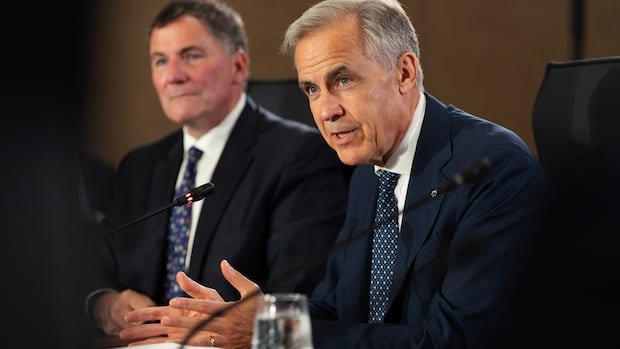
Carney has expressed a desire for a comprehensive trade deal and emphasized the importance of addressing strategic sectors, including automobiles, as the deadline approaches. He noted ongoing efforts to secure a global deal through negotiations. Carney’s comments come amid escalating tensions, with Trump criticizing Canada during a recent rally in Las Vegas. Despite the rhetoric, Carney reaffirmed Canada’s commitment to advocating for its workers and businesses.
Conservative Leader Pierre Poilievre has urged Carney to deliver results in the tariff dispute, criticizing the approach taken in negotiations with the U.S. Carney responded by emphasizing the importance of standing up for Canadian interests and businesses amidst the ongoing trade discussions.