

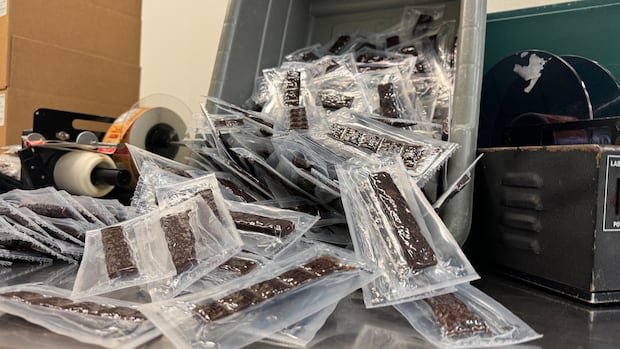

Shianna Smart, co-owner of Trails End Buffalo Stix in Gull Lake, Saskatchewan, initially doubted the legitimacy of an email from NASA. However, after engaging with NASA representatives, she became thrilled to learn that Canadian astronaut Joshua Kutryk had selected their bison jerky for the upcoming NASA-SpaceX mission to the International Space Station, scheduled for October 1 pending final approval.
Previously, in 2013, Canadian astronaut Chris Hadfield had enjoyed the same Saskatchewan bison jerky sticks in space under the previous ownership of the business. Smart expressed her excitement at the unexpected opportunity and the prospect of showcasing their space-bound jerky as a versatile snack for various occasions like kids’ lunches, sports, and travel.
The jerky underwent a rigorous selection process by both the Canadian Space Agency (CSA) and NASA before being approved for space travel beyond the stratosphere. Natalie Hirsch, overseeing operational space medicine at CSA, mentioned that while NASA supplies most of the food for astronauts, they can customize a portion of it, with CSA offering Canadian options based on the astronauts’ preferences.
Key requirements for space-bound food include an 18-month shelf life, space-friendly packaging, and the absence of crumbs. Local support plays a vital role in the success of small businesses like Trails End Buffalo Stix, as noted by Nolan Langer, assistant plant manager at the Saskatchewan Food Industry Development Centre. The facility has been instrumental in producing jerky for almost two decades, catering to small clients in western Canada.
In addition to bison jerky, Canadian space missions feature a variety of Canadian products, such as maple syrup from Ontario and Quebec and salmon from the west coast. This diverse selection reflects Canada’s contribution to space exploration and showcases local products on an international platform.