
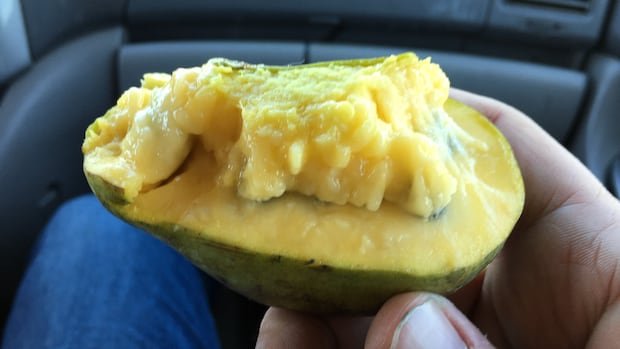


It may come as a surprise that the tropical-flavored pawpaw fruit is cultivated in Canada. Chef Tawnya Brant expresses that getting a taste of it is a delightful experience.
“Imagine the essence of the tropics. If that were a taste or scent by itself, that’s likely exactly what a pawpaw embodies,” shared Brant, the proprietor of Yawékon Foods and the host of APTN’s One Dish One Spoon.
Hailing from the Mohawk tribe at Six Nations of the Grand River, Brant describes the fruit as a fusion of banana, mango, and pineapple flavors, with a creamy consistency that turns almost caramel-like when fully ripe.
“It’s akin to a peculiar banana… a tad shorter and plumper, resembling an oval shape — and they contain large seeds,” she shared with The Current‘s Matt Galloway.
Pawpaws have thrived in North America for centuries, once plentiful from Florida to Missouri and southern Ontario. Indigenous communities extensively cultivated them before colonization, but as forests were cleared for agriculture, their presence diminished. Some trees still exist in the wild and in specific orchards in southern Ontario, B.C., and Quebec, bearing fruit in autumn.
One reason for the limited awareness of pawpaws is their short shelf life, quickly browning after harvesting. Their susceptibility to bruising also hinders large-scale commercial harvesting and distribution.

Established in 2015, Vatican City Post is a professional and independent news portal committed to delivering accurate, balanced, and timely information. Covering global affairs, religion, culture, and current events, we strive to uphold the highest standards of journalism with integrity, transparency, and professionalism.
© Vatican City Post | All rights reserved.