


The conflict in Gaza started with an incursion by militants aligned with Hamas into southern Israel on October 7, 2023, resulting in approximately 1,200 casualties, predominantly civilians, and the abduction of 251 individuals. As of now, 48 hostages, less than half of whom are believed to be alive, are still being held in Gaza.
Reports from the Hamas-controlled health ministry in Gaza indicate that over 64,964 individuals have lost their lives in Israeli attacks since the conflict began. The vast majority of residences have suffered damage or destruction, leading to the collapse of essential services like healthcare, water supply, sanitation, and hygiene. Experts supported by the UN have declared a state of famine in Gaza City.
An independent team of experts, appointed by the United Nations Human Rights Council, has determined that Israel is engaging in genocidal activities in Gaza. The team identified evidence of four out of five genocidal acts recognized by international law, including killing group members, causing severe physical or mental harm, deliberately imposing conditions to bring about destruction, and obstructing births.
It is important to note that while the Human Rights Council commissioned this team of experts, their findings do not represent the views of the entire United Nations. Israel has strongly denied the accusations, labeling the report as “distorted and baseless.”
For the innocent civilians caught in the midst of this conflict, the situation transcends politics, religion, or vengeance. Their lives have been upended, plunging them into a harrowing struggle for survival, where they are witnessing unspeakable atrocities and enduring the loss of their loved ones.
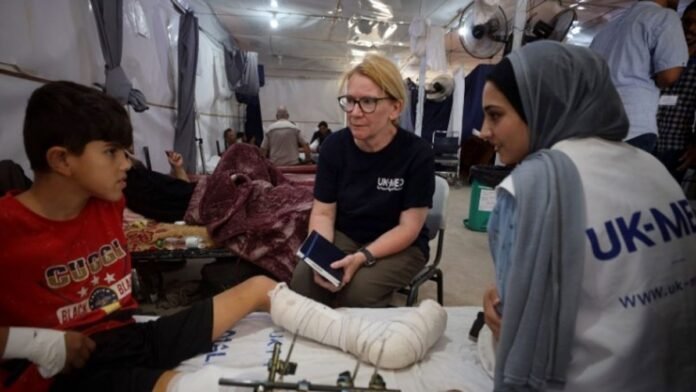
Mandy Blackman, a 56-year-old volunteer managing a field hospital in al-Mawasi, Gaza Strip, for the organization UK-Med, vividly portrays the grim realities faced on the frontlines in an exclusive account for The Mirror…
“Each day begins with the heart-wrenching sight of emaciated children trying to rouse their deceased parents in al-Mawansi, Gaza Strip.
Desperate parents plead for provisions like food, diapers, and medical care for their ailing children. Malnourished infants with sunken faces and visible rib cages arrive for treatment. I attend to gunshot wounds daily, affecting individuals of all ages and genders, many left with permanent disabilities. Distraught relatives search for the children they were separated from in the chaos, some arriving by makeshift transport like donkeys and carts.
For some, there is a glimmer of hope – their children are alive, albeit severely injured. Others receive the devastating news that their child, or children, have succumbed to the violence.
This bleak reality is what defines life on the frontlines in Gaza. While my usual workplace is Kettering General Hospital in Northamptonshire, I have been deployed to manage a field hospital here. Despite my efforts to remain resilient, the scenes I encounter have brought me to tears.
Once, a young teenage boy innocently shot in the head while selling water to support his family was brought into our care. He was peddling water in small plastic bags, akin to those used for goldfish at fairs, when tragedy struck. He was rushed to our facility by bystanders, where his grieving parents could be by his side before he passed away.
Many children arrive malnourished, presenting with infected wounds that have been neglected. Their compromised physical and mental states, compounded by persistent trauma, untreated diabetes, and hypertension, pose significant challenges for basic medical interventions. Children often remain silent, bearing deep emotional scars across all age groups.
A multitude of children arrive with abdominal gunshot wounds, requiring urgent surgical intervention to save their lives. However, many will need multiple surgeries and may end up with permanent colostomies.
The horrors persist without respite. My day begins at 7 am with the immediate triage of mass casualties from the previous night. Healthcare workers from Gaza City may have fled their homes due to damage or destruction, with some losing family members in the process.
We are alerted to mass incidents by the sound of explosions or blaring horns. I am constantly enveloped in noise, peril, and unpredictability. Patients, often young men with gunshot or blast injuries, traverse long distances to reach our hospital.
Sleep is a luxury we cannot guarantee. Throughout the night, I hear the anguished cries of families seeking urgent aid as they arrive with injured loved ones.
There is a frustrating scarcity of essential medical supplies, stalled at the border awaiting clearance. Critical items like pain relief medications, antibiotics, and anesthetics are in short supply.
Bandages for burns and complex wounds, which form a significant part of