

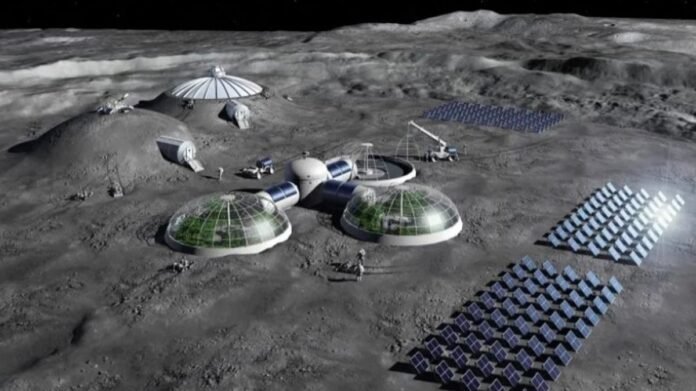

NASA has unveiled its intention to establish a “village” on the Moon to support long-term human habitation. Administrator Sean Duffy announced the plan for a lunar settlement within the next decade during the International Aeronautical Congress in Sydney, Australia. Representatives from leading space agencies, including the USA, China, Japan, India, Europe, and Canada, were present at the event.
Addressing concerns about territorial claims in space, Mr. Duffy emphasized that the US aims for peaceful exploration and cooperation. He outlined NASA’s vision for more than just a lunar outpost, describing a future lunar village that could potentially be powered by nuclear energy.
Looking ahead, NASA is accelerating efforts to build a nuclear reactor on the Moon by 2030, aligning with the US goal of establishing a permanent human presence on the lunar surface. The agency is also focused on advancing its Mars exploration mission, with plans to potentially land humans on Mars in the near future.
Various countries, including the US, China, Russia, India, and Japan, are actively engaged in lunar exploration efforts, with some aiming to establish permanent human settlements on the Moon. NASA’s strategic priorities include advancing technological capabilities to support lunar and Martian missions, fostering a lunar economy, and enhancing national security in space.
In another significant development, NASA announced plans to send astronauts on a mission around the Moon, marking a historic milestone in crewed lunar exploration. This mission, part of the Artemis program, will pave the way for future crewed lunar surface missions and eventual human missions to Mars.
The Artemis II mission, set to send four astronauts around the Moon next year, is a crucial step in NASA’s strategy for sustained human presence on the Moon. The agency aims to accelerate the mission timeline, with aspirations for astronauts to land on the Moon as early as 2027. Safety remains a top priority as NASA prepares for this groundbreaking journey into space.
Key NASA officials, including Lakiesha Hawkins and Artemis Launch Director Charlie Blackwell-Thompson, have underscored the historic significance and technical readiness of the upcoming missions. The Space Launch System (SLS) rocket, essential for crewed lunar missions, is nearing completion, with final preparations underway for the upcoming lunar missions.