

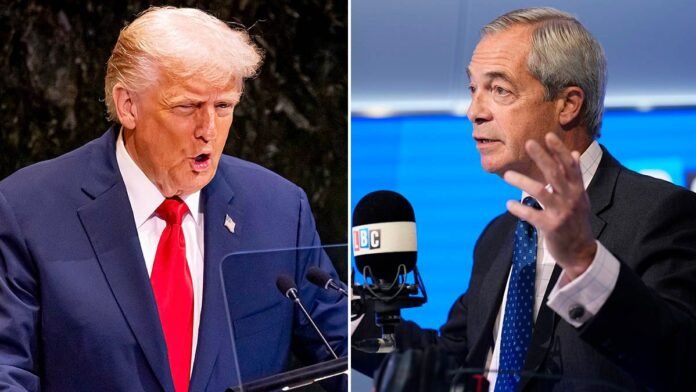

Nigel Farage faces criticism for not taking a stance on Donald Trump’s controversial linking of paracetamol to autism. Farage, leader of Reform UK, emphasized that scientific knowledge is always evolving, refraining from aligning with experts cautioning against such associations. Health Secretary Wes Streeting condemned Farage, labeling him as a deceitful figure in British politics and urging the public to reject his assertions.
Trump’s assertion that paracetamol, known as Tylenol in the US, could be linked to autism caused an uproar among medical professionals following its announcement. However, when questioned about Trump’s claims during an LBC interview, Farage expressed uncertainty, noting past instances where supposedly safe drugs turned out to be harmful. He suggested that Trump’s personal experiences with autism in his family might influence his views.
Regarding the issue of whether it is irresponsible for a US president to make such claims, Farage maintained his neutral stance, emphasizing his reluctance to side with any specific scientific viewpoint due to the evolving nature of scientific knowledge.
Streeting later criticized Farage for his indecisiveness, accusing him of lacking backbone and promoting anti-scientific beliefs. Liberal Democrat Health spokeswoman Helen Morgan also condemned Farage, alleging that he is advocating for Trump’s dangerous anti-science agenda in the UK.
Medical experts, including Dr. Steven Fleischman and Dr. Monique Botha, have refuted Trump’s claims, emphasizing the lack of scientific evidence supporting a direct link between paracetamol use during pregnancy and autism in children. They highlighted the importance of providing pregnant women with safe pain relief options and cautioned against unnecessary fearmongering.
The debate surrounding Trump’s controversial statements continues to spark discussions on the intersection of politics, science, and public health.