

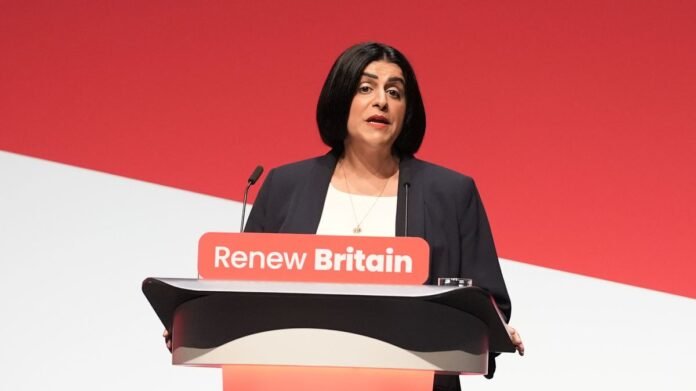

Shabana Mahmood has raised concerns about a growing trend in the UK moving from patriotism towards ethno-nationalism. The Home Secretary has vowed to take a strong stance on immigration, cautioning against falling for the deceptive promises of Nigel Farage if the Labour Party fails to address the issue effectively. She outlined several measures to make obtaining indefinite leave to remain in the UK more challenging, emphasizing the importance of contributing to society as a requirement for residency.
During the Labour Party Conference in Liverpool, Mahmood highlighted the deep divisions exposed by a march organized by Tommy Robinson, with 150,000 attendees. She acknowledged the presence of individuals reminiscent of past extremist groups but stressed the broader societal implications at play.
Mahmood warned that failing to secure the UK’s borders could exacerbate existing divisions, leading patriotism to transform into a more exclusionary ethno-nationalism. She emphasized the need to understand the underlying reasons behind this shift in sentiment to prevent further polarization.
The Home Secretary unveiled changes to the residency criteria for indefinite leave to remain, increasing the qualifying period from five to ten years. Additionally, she introduced new requirements such as employment, payment of national insurance, no reliance on benefits, English proficiency, a clean criminal record, and community involvement as conditions for settlement.
Critics, like Green MP Carla Denyer, criticized Mahmood’s proposals as disconnected from the reality of migration dynamics. Denyer called for a more balanced approach that considers the positive contributions of migrants to the economy, essential services like the NHS, and the cultural enrichment they bring to the UK. She advocated for a shift towards a migration system that prioritizes community integration and support for asylum seekers to work and contribute positively to society.
Denyer argued that the current migration framework, focused solely on reducing numbers, fails to address the holistic benefits of migration and suggested reforming the system to be more inclusive and community-oriented. She urged for practical solutions that empower migrants to participate in the economy and foster a more welcoming environment, rather than punitive measures proposed by Mahmood.