

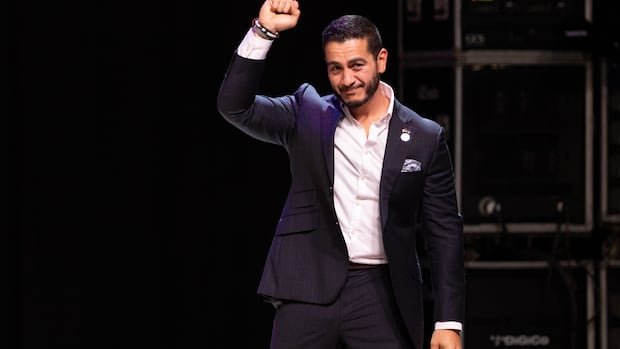

Abdul El-Sayed’s triumph in the Democratic Senate primary in Michigan is being hailed as a significant victory for the party’s progressive faction. In this crucial battleground state, the former public health official secured a closely contested win with a modest budget against Haley Stevens, a moderate candidate supported by over $60 million US in campaign funds.
El-Sayed’s success reflects a larger trend of primary wins for Democratic socialist and leftist candidates. Just recently, progressive Peggy Flanagan emerged victorious in Minnesota’s Democratic Senate primary. However, while these left-leaning candidates are securing nominations, some political analysts remain skeptical about their chances in the upcoming midterm elections this fall.
This raises questions about the trajectory of the Democratic Party and the potential contenders for the presidential race in 2028. In a recent discussion on the podcast “Front Burner,” Washington correspondent Katie Simpson, along with host Jayme Poisson and Bloomberg senior White House reporter Josh Wingrove, examined these developments.
The conversation touched upon the evolving dynamics within the Democratic Party. Fareed Zakaria highlighted the need for the party to address cultural and social issues while maintaining a balance on economic policies. Despite the momentum of the progressive wing, concerns exist about their electoral viability.
Josh Wingrove noted the similarities between recent primary outcomes and past elections, citing Bernie Sanders’ performance in Michigan in 2016. The emergence of figures like Alexandria Ocasio-Cortez as leading voices in the progressive movement raises questions about future leadership and potential candidates for the 2028 presidential race.
As the Democratic Party navigates this period of transition, there is a growing emphasis on rebranding and addressing voter frustrations. The lack of a clear vision and internal conflicts within the party pose challenges for effectively mobilizing support.
Looking ahead, the Democratic Party faces the prospect of generational change, as evidenced by the younger candidates vying for positions such as the one left open by retiring Sen. Gary Peters in Michigan. The evolving landscape of Democratic politics underscores the need for adaptability and unity within the party.