

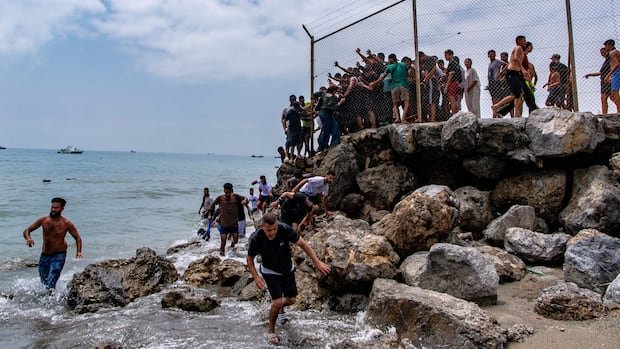

Authorities have characterized it as “absolute chaos,” “unsustainable,” and “a violation.” Over 57 individuals have lost their lives following the breach of tens of thousands of migrants from Morocco into Spain’s Ceuta enclave via both land and sea routes, triggering astonishment and discord in Europe.
Approximately 60,000 people reportedly crossed into the Spanish enclave in North Africa on Thursday, with an estimated 48,300 individuals returning to Morocco by Friday evening. The migrants utilized various methods, including swimming five kilometers from the Moroccan town of Fnideq and attempting to cross from the nearby town of Belyounech, which offered a shorter distance for the journey.
Some of the migrants, including children and unaccompanied minors, raised concerns from a Moroccan NGO about the risks associated with taking children on irregular migration routes. The influx of migrants prompted Spain to deploy military forces to restore order and manage the situation.
Spanish authorities confirmed the recovery of 57 bodies on the Spanish side of the border, with potential additional casualties on the Moroccan side. The fatalities resulted from drowning and fatal injuries sustained while attempting to climb the breakwater that borders the fence.
The incident in Ceuta highlighted the ongoing issues surrounding migration routes, with Spain being a key entry point for individuals seeking economic opportunities or refuge from violence in their home countries. The territories of Ceuta and Melilla serve as focal points for migrants aiming to reach Spain from Morocco and other African regions. The surge in migration was attributed to various factors, including a recent Spanish Supreme Court ruling affecting the deportation of sea arrivals and alleged involvement of human smugglers.
The response to the crisis involved Spain deploying armed forces and additional police to manage the situation in Ceuta, while Moroccan security forces worked to prevent further breaches at the border gates. However, the overcrowding and lack of basic necessities led to migrants attempting to return to Morocco, facing challenges such as food shortages and inadequate shelter.
The sudden surge in migration was further compounded by long-standing issues in Morocco, including high youth unemployment rates and limited prospects for the future. The events in Ceuta underscored the complex dynamics of migration and border control in the Mediterranean region, with political considerations also playing a role in the situation.
Despite some migrants attempting to re-enter Ceuta through alternative routes, the majority sought to return to Morocco, highlighting the difficulties and uncertainties faced by individuals embarking on migration journeys in search of a better life.