

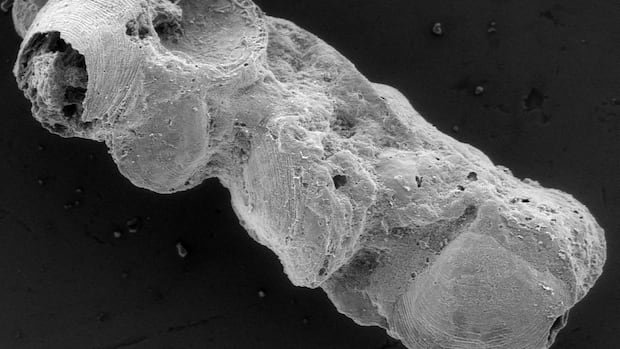

Long before the age of dinosaurs, a surge in biodiversity led to the emergence of early animals and a rise in excrement. A recent study sheds light on the significance of coprolites, or fossilized feces, in understanding ancient Earth ecosystems and their relevance to present-day nutrient cycles and animal interactions.
Published in the journal Trends in Evolution & Ecology, the research focused on analyzing fecal fossils dating back to the Cambrian period, approximately 540 million years ago. By examining feces remnants from primitive worms, invertebrates, and mollusk-like creatures, scientists inferred that excrement played a crucial role in enhancing deep-sea habitats and nutrient availability during that era, well before the time of dinosaurs.
The abundance of fecal matter during the Cambrian period, as revealed by the study, holds key insights into the origins of contemporary marine ecosystems. Julien Kimmig, one of the study’s co-authors and head of the paleontology division at the Karlsruhe Natural History Museum in Germany, emphasized the vital role of excrement in sustaining both past and present ecosystems.
The research conducted by Kimmig and Russell Bicknell involved the examination of numerous coprolites from various deposits worldwide, ranging from burrowing worms to brachiopods and hyoliths. These fecal specimens, initially microscopic, evolved over time into larger forms, providing valuable clues about evolution, animal dietary habits, and ecological dynamics during the Cambrian Radiation.
Beyond unraveling predator-prey dynamics and evolutionary patterns, the study underscores the importance of coprolites in deciphering Earth’s ecological history and how ancient ecosystems coped with environmental shifts. By studying fecal fossils, researchers aim to draw parallels between past and present ecosystems, offering valuable insights into potential future ecological scenarios.
The study’s findings highlight a significant surge in fecal production during the Cambrian Radiation compared to the preceding Ediacaran period, emphasizing the pivotal role of excrement in shaping ancient marine environments. This comprehensive approach, according to experts, allows for a deeper understanding of ecological processes and their implications for modern and future ecosystems.
For paleontologists, fecal analysis has become a crucial aspect of research, shedding light on not only the dietary habits of ancient organisms but also the intricate ecological interactions that shaped prehistoric life. Karen Chin, a prominent paleontologist and curator at the Museum of Natural History, emphasizes the importance of coprolites in unraveling complex ecological relationships and nutrient cycles across different geological eras.
As researchers delve deeper into the world of coprolites, these overlooked fossils hold the key to unlocking a wealth of information about ancient ecosystems and their relevance to contemporary and future environmental challenges.